Affiliate Disclosure: This article contains affiliate links. If you choose to sign up for WordPress.com through these links, I may earn a small commission at no additional cost to you.
| Tool | Price Starts At | Free Option? |
| Semrush One | $199/mo | 7-Day Trial |
| Search Atlas | $99/mo | 7-Day Trial |
| SE Ranking | $129/mo | 14-Day Trial |
| Ubersuggest | $49/mo | Free version |
| GSC | Free | Always Free |
| Mangools | $61/mo | 10-Day Trial |
| Surfer SEO | $49/mo | Money-back guarantee |
Ever sign up for an SEO tool and instantly regret it 10 minutes later?
Yeah. I’ve been there.
A few years ago, I thought the best SEO software for small business owners had to be packed with fancy dashboards, endless reports, and “advanced” features I’d probably never use. So I kept buying more tools, hoping one of them would finally make SEO easier.
Instead, I just wasted time.
Most SEO tools for small business owners are overloaded with data but terrible at helping you figure out what actually matters. And when you’re already busy running a business, the last thing you need is another complicated platform eating up your day.
So after testing everything from expensive enterprise platforms to affordable SEO software tools built for startups, I narrowed this list down to the ones that genuinely help. The tools that save time, uncover real opportunities, and make SEO feel manageable instead of exhausting.
If you’re looking for the best budget-friendly SEO tools for startups this year — or simply trying to find SEO software for small business growth without the overwhelm — this guide will help you skip the fluff and pick tools you’ll actually use.
What Small Businesses Really Need From SEO Software in 2026
Here’s something most people realize way too late:
The problem usually is not your SEO strategy.
It’s the tools.
A lot of SEO tools for small business owners are built like they expect you to have an in-house marketing team, an SEO consultant, and unlimited free time. You log in hoping for clarity and end up buried under audits, scores, graphs, warnings, and reports you barely understand.
Meanwhile, all you really want is:
- more traffic
- more leads
- more customers
- and less guessing
Honestly, most small business owners are not trying to become full-time SEO experts. They just want SEO software for small business growth that helps them make smarter decisions quickly.
That’s why the best SEO software for small business owners is usually not the platform with the most features.
It’s the one you’ll actually use consistently.
The Biggest Mistake Small Businesses Make With SEO Software
A lot of businesses buy giant all-in-one platforms before they even have a content strategy.
That’s backwards.
You do not need 400 reports before publishing your first useful article.
And you definitely do not need enterprise-level SEO software for small business websites that only publish a couple blog posts each month.
I honestly think some SEO companies make their tools intentionally overwhelming because complexity feels “professional.”
But complicated does not always mean better.
Sometimes the best small SEO tool keyword ranking strategy is simply:
- finding realistic keywords
- creating genuinely useful content
- fixing obvious website problems
- and repeating the process consistently
Simple wins.
What Good SEO Tools for Small Business Owners Actually Do
The best tools save time instead of creating more work.
They help you answer questions like:
- What keywords should I target?
- Why is my page not ranking?
- What are competitors doing better?
- Which SEO issues actually matter?
- What can I ignore for now?
That’s the stuff that moves businesses forward.
Not endless vanity metrics.
Keyword Research Should Feel Simple
A good SEO tool should help you discover opportunities fast without making you feel like you need an SEO certification first.
The best SEO software for small business users usually makes keyword research feel approachable:
- easy traffic opportunities
- low-competition keywords
- local search terms
- content ideas people actually search for
That matters because most businesses do not fail from lack of effort.
They fail because they spend months creating content nobody wanted in the first place.
Affordable SEO Software Tools Should Save You Time
This part matters more than people admit.
A tool can have amazing features, but if it takes hours to understand, it’s already costing you money.
That’s why affordable SEO software tools often outperform expensive enterprise platforms for smaller businesses. They remove friction.
You log in.
You find opportunities.
You take action.
You move on with your day.
That’s how SEO should feel.
The Best Budget-Friendly SEO Tools for Startups This Year Focus on Action
Startups and small businesses usually have one major limitation:
Time.
Not every company has a dedicated SEO team sitting around optimizing title tags all day.
So the best budget-friendly SEO tools for startups this year are the ones that:
- simplify research
- speed up content creation
- automate repetitive tasks
- track rankings clearly
- and help businesses focus on the highest-impact work first
Because honestly, consistency beats complexity almost every time in SEO.
And if an SEO platform still feels confusing after a week, there’s a good chance it’s slowing you down instead of helping you grow.
7 Best SEO Tools for Small Businesses in 2026
Here are the best SEO tools for small businesses this year that actually respect your time and budget.
#1. Semrush One — Best All-In-One SEO Software for Small Business Marketing
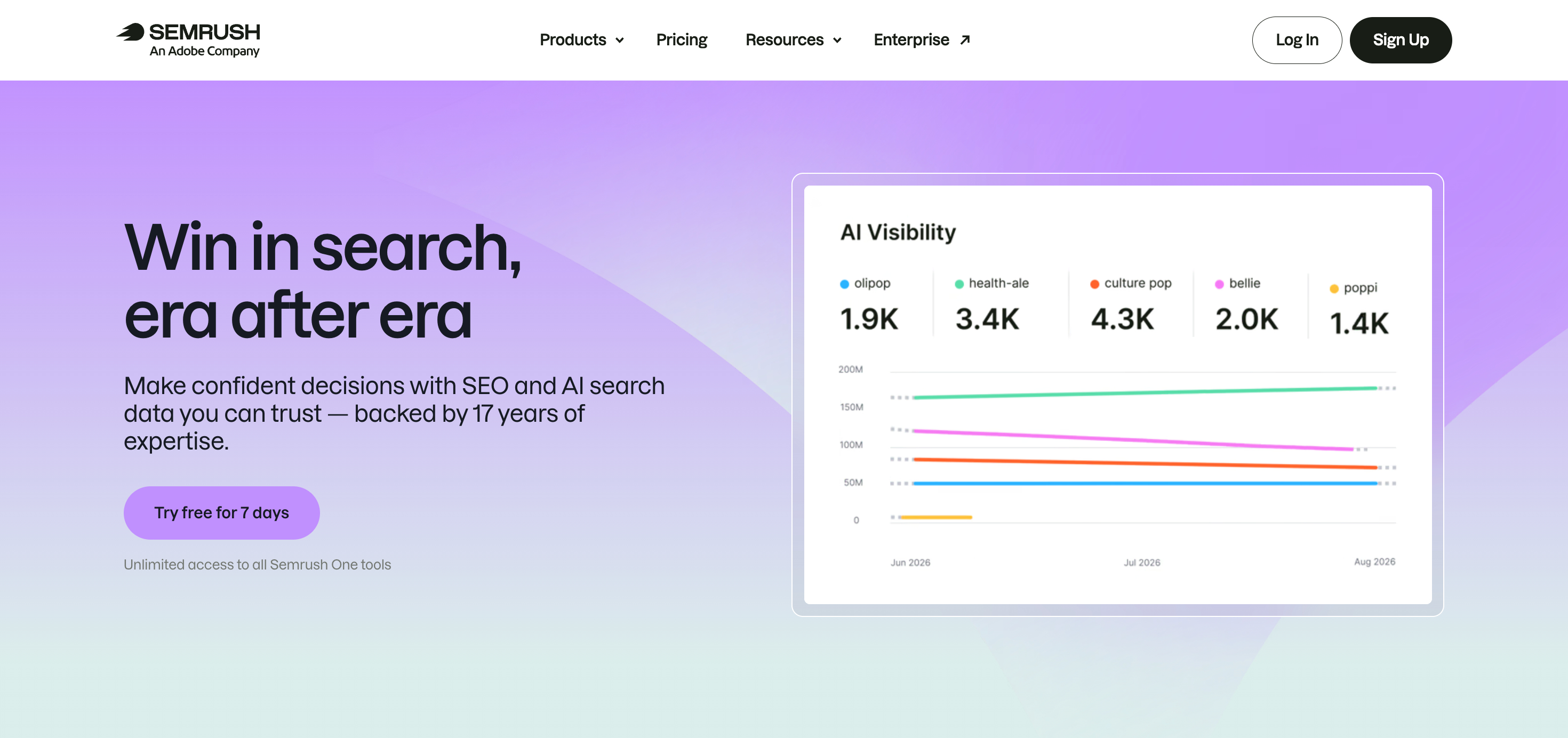
If you’ve ever wished one tool could handle most of your marketing without forcing you to juggle five different platforms, Semrush One is probably the closest thing to that right now.
And honestly, that’s why so many businesses still consider it one of the best SEO software tools for small business growth in 2026.
Instead of focusing only on rankings, Semrush One tries to connect everything together:
- SEO
- content marketing
- competitor research
- local SEO
- PPC
- social media
- AI-assisted workflows
For small business owners wearing ten different hats every day, that convenience matters a lot.
Why Small Businesses Like Semrush One
A lot of SEO tools feel disconnected.
You use one platform for keyword research, another for content optimization, another for rank tracking, and then another for reporting.
Semrush One pulls most of that into one place.
That’s a huge reason it continues to dominate conversations around SEO tools for small business owners. It reduces the chaos.
Instead of constantly switching tools, you can:
- research keywords
- monitor rankings
- audit your site
- spy on competitors
- and plan content
without leaving the platform.
For busy teams, that saves real time.
Keyword Research Feels More Actionable
This is where Semrush One becomes especially useful.
A lot of SEO software for small business websites throws giant spreadsheets at you and expects you to figure out the strategy yourself.
Semrush does a better job organizing opportunities into something usable.
Its keyword tools help you quickly spot:
- lower competition terms
- question-based searches
- local keyword opportunities
- trending topics
- competitor gaps
And honestly, that matters more than having endless raw data.
Because the goal is not to collect keywords.
The goal is to find keywords you can realistically rank for and turn into customers.
The Content Tools Save Serious Time
One reason Semrush One stands out among affordable SEO software tools is how much busywork it removes.
The platform helps with:
- content briefs
- topic ideas
- SEO writing suggestions
- competitor comparisons
- optimization recommendations
That means less time guessing what to write and more time actually publishing useful content.
And in 2026, speed matters.
Businesses consistently publishing quality content usually outperform businesses endlessly “planning” content.
Local SEO Features Are Surprisingly Strong
For local businesses, Semrush One can handle a lot more than people expect.
You can track:
- local keyword rankings
- business listings
- online reviews
- competitor visibility
- map pack performance
That makes it one of the more complete SEO tools small business owners can use without buying separate local SEO software.
Especially if your customers come from searches like:
- “near me”
- “best [service] in [city]”
- “open now”
Downsides You Should Know
Semrush One is powerful, but it’s not the simplest platform on this list.
New users can still feel overwhelmed at first because there are so many tools packed into the dashboard.
And honestly, some small businesses will never use half the features they’re paying for.
That’s important to think about.
If you only need basic keyword tracking and occasional SEO insights, lighter platforms like Mangools or Ubersuggest may feel easier.
Pricing can also rise quickly depending on your team size and usage.
Best For
Semrush One is best for:
- growing small businesses
- content-heavy websites
- agencies
- ecommerce brands
- local businesses
- teams managing SEO and paid ads together
If you want one platform that can manage almost every part of your digital marketing, this is one of the strongest options available right now.
Pricing
Semrush One plans start at around $199/month, with higher-tier plans available for larger teams and agencies.
Yes, it’s more expensive than some affordable SEO software tools on this list, but if you’re managing SEO, content marketing, local SEO, and competitor research in one place, it can replace multiple subscriptions.
Free Trial
Semrush One usually offers a 7-day free trial for new users, which is honestly the best way to see whether the platform fits your workflow before committing to a paid plan.
If you’re tired of bouncing between disconnected SEO tools for small business marketing, it’s worth testing for yourself.
Start your 7-day free trial here.
#2. Search Atlas — Best AI-Powered SEO Tool for Content Automation
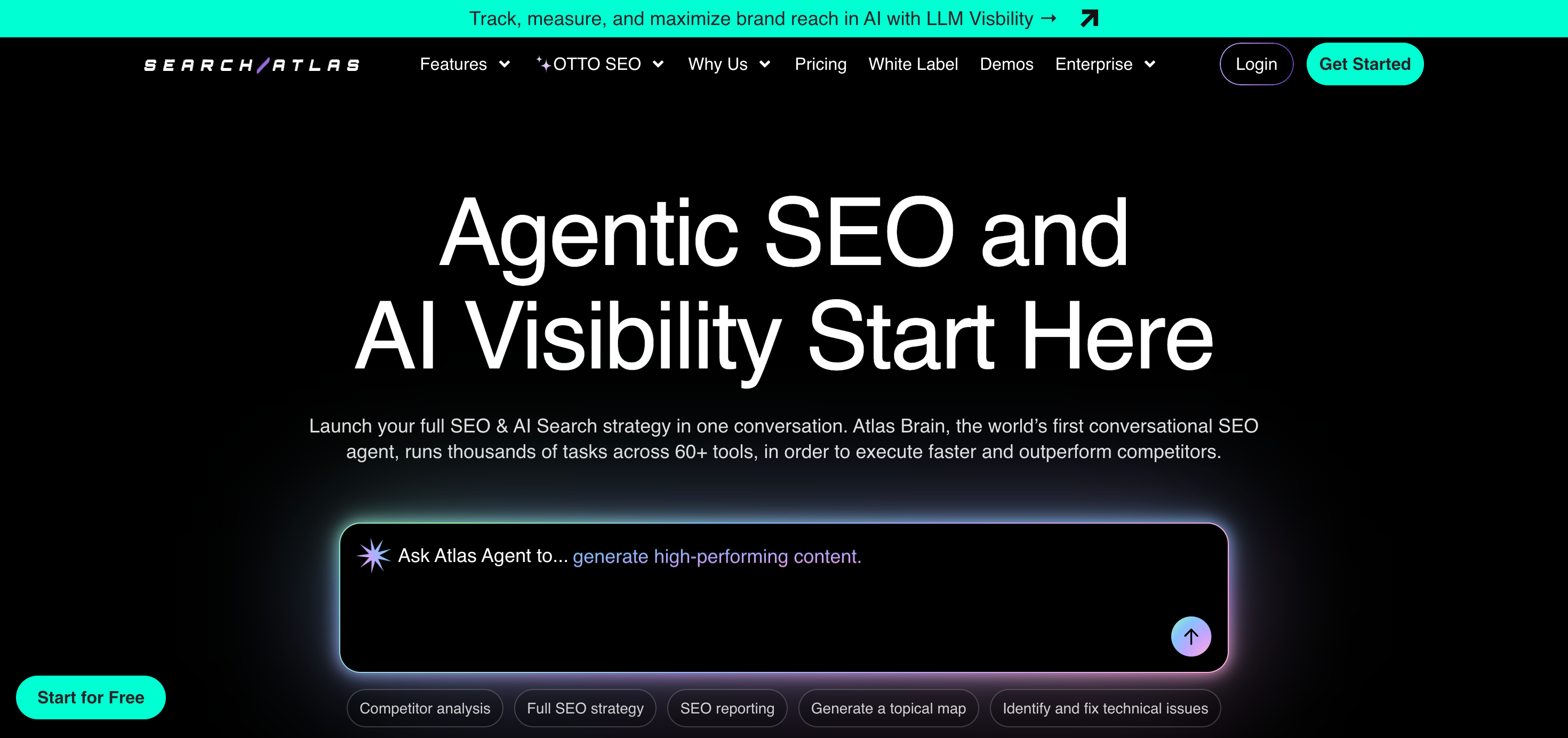
Search Atlas feels like one of those SEO platforms that quietly came out of nowhere and suddenly started showing up everywhere in marketing conversations.
And honestly, it makes sense.
A lot of SEO software for small business owners still feels stuck in the old way of doing things:
- endless manual research
- complicated audits
- disconnected workflows
- too much busywork
Search Atlas leans heavily into automation and AI to speed all of that up.
The big selling point?
It tries to help small businesses create, optimize, and manage SEO content faster without needing a giant team behind the scenes.
Why Small Businesses Are Paying Attention to Search Atlas
Time is the biggest bottleneck for most businesses.
Not ideas. Not tools.
Not even a budget sometimes.
Just time.
That’s why Search Atlas stands out among newer SEO tools for small business growth. It focuses heavily on reducing repetitive SEO work.
Instead of manually piecing together:
- keyword research
- topical maps
- optimization suggestions
- content briefs
- internal linking
The platform automates large parts of the workflow.
And in 2026, that’s becoming a bigger deal every month.
AI Content Features Actually Feel Useful
Let’s be honest.
A lot of AI SEO platforms promise way more than they deliver.
Some tools generate content, so generic it sounds like a robot trying to sell you life insurance.
Search Atlas works better when you use AI as an assistant instead of a replacement for human writing.
That’s where it becomes valuable.
The platform helps speed up:
- article outlines
- topical authority planning
- keyword clustering
- content optimization
- internal linking suggestions
For small businesses publishing lots of content, this can save a massive amount of time each week.
Especially if you do not have a dedicated SEO team.
Topical Authority Features Are Strong
One thing Search Atlas does particularly well is helping businesses build topical relevance instead of chasing random keywords.
That matters because Google in 2026 rewards websites that demonstrate depth and consistency around topics.
Instead of publishing scattered articles, Search Atlas pushes businesses toward creating connected content ecosystems around:
- services
- industries
- products
- customer pain points
That’s smart SEO.
And honestly, a lot of older, affordable SEO software tools still struggle with this.
The Automation Can Be a Huge Time Saver
This is probably the biggest reason startups are interested in it.
The platform automates parts of SEO that normally eat hours:
- content scoring
- link suggestions
- keyword grouping
- technical monitoring
- optimization recommendations
That makes it one of the more interesting options among the best budget-friendly SEO tools for startups this year — especially for content-heavy businesses trying to grow quickly.
Downsides You Should Know
Search Atlas is powerful, but there’s still a learning curve.
Some features feel more advanced than beginner-focused platforms like Ubersuggest or Mangools.
And honestly, businesses expecting “push button SEO” may end up disappointed.
No AI platform completely replaces strategy, expertise, or genuinely useful content.
That’s important to remember.
Pricing can also feel high for very small businesses if you’re only publishing occasional blog content.
Best For
Search Atlas is best for:
- content-heavy businesses
- agencies
- startups scaling SEO quickly
- AI-assisted content teams
- businesses focused on topical authority
If your SEO strategy relies heavily on publishing and optimizing content consistently, this platform can remove a huge amount of manual work.
Pricing
Search Atlas plans typically start around $99/month, with larger plans available for agencies and bigger content teams.
Compared to some enterprise SEO software for small business marketing, the pricing is still fairly competitive considering how many automation features are included.
Free Trial
Search Atlas usually offers a 7-day free trial or demo access for new users.
And honestly, if you’re curious about AI-powered SEO workflows but tired of bloated enterprise platforms, this is one of the more interesting tools worth testing right now.
#3. SE Ranking — Best Affordable SEO Software Tool for Agencies and Startups
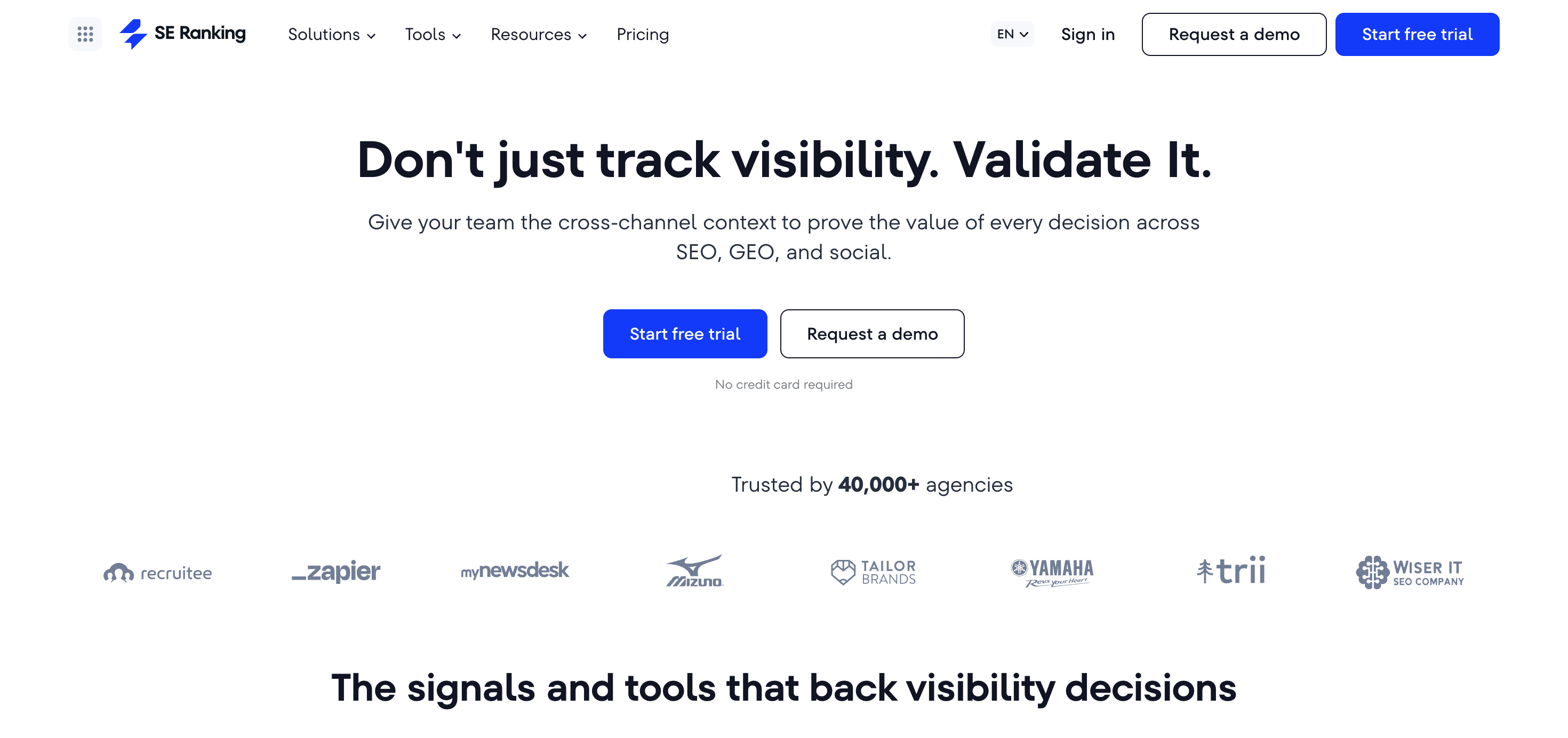
SE Ranking is one of those tools that surprises people.
At first glance, it looks like a simpler alternative to giant SEO platforms. But once you start using it, you realize it covers way more ground than most people expect.
And honestly, that balance is exactly why it’s become one of the best affordable SEO software tools for small businesses and startups in 2026.
It gives you a strong mix of:
- keyword tracking
- competitor research
- site audits
- backlink monitoring
- local SEO tools
- reporting
without making the platform feel ridiculously overwhelming.
Why Small Businesses Like SE Ranking
A lot of SEO software for small business owners falls into one of two extremes:
- too basic
- or way too complicated
SE Ranking sits nicely in the middle.
You get enough depth to grow your SEO strategy seriously, but the interface still feels approachable enough for non-experts.
That matters more than people think.
Because even powerful SEO tools become useless if business owners avoid logging in because the dashboard gives them a headache.
SE Ranking keeps things cleaner and easier to navigate than many larger competitors.
Keyword Tracking Is One of Its Biggest Strengths
This is where SE Ranking really shines.
Its small SEO tool keyword ranking features are genuinely strong for the price.
You can track:
- national rankings
- local rankings
- mobile rankings
- competitor positions
- keyword visibility trends
And the reports are easy to understand without feeling watered down.
For local businesses and startups trying to monitor progress clearly, this is incredibly useful.
Especially because obsessively Googling your own keywords every day is not a strategy.
The Platform Feels Practical
Some SEO tools feel built more for presentations than actual work.
SE Ranking feels practical.
You log in and quickly understand:
- what’s improving
- what needs attention
- what competitors are doing
- where opportunities exist
without getting buried under unnecessary complexity.
That’s a huge reason it keeps gaining traction among businesses searching for SEO tools small business teams can realistically use every week.
Local SEO Features Are Helpful
For local businesses, SE Ranking includes several useful features without forcing you into expensive enterprise pricing.
You can manage:
- local keyword rankings
- Google Business visibility
- competitor tracking
- local SEO audits
That makes it especially useful for:
- agencies
- service businesses
- local brands
- multi-location businesses
trying to improve visibility in local search results.
Downsides You Should Know
SE Ranking is strong overall, but some of its data depth still falls behind larger platforms like Semrush One for highly competitive industries.
And while the platform is easier to use than many enterprise SEO tools, complete beginners may still need a little time to understand certain reports and features.
Its AI capabilities also feel lighter compared to newer AI-focused platforms like Search Atlas.
Best For
SE Ranking is best for:
- startups
- small agencies
- local businesses
- freelancers
- growing content sites
- businesses wanting affordable SEO software tools without huge complexity
If you want a balanced SEO platform that gives solid functionality without enterprise-level pricing, this is one of the strongest options available right now.
Pricing
SE Ranking plans usually start around $129/month, depending on ranking limits and feature access.
Compared to many SEO software for small business platforms charging well over $100 monthly, it offers strong value for growing businesses and smaller teams.
Free Trial
SE Ranking typically offers a 14-day free trial for new users.
And honestly, if you’ve been looking for affordable SEO software tools that still feel powerful enough to grow with your business, this is one of the easiest platforms to test without a huge financial commitment.
Start a 14-day free trial of SE Ranking.
#4. Ubersuggest — Best Budget-Friendly SEO Tool for Beginners
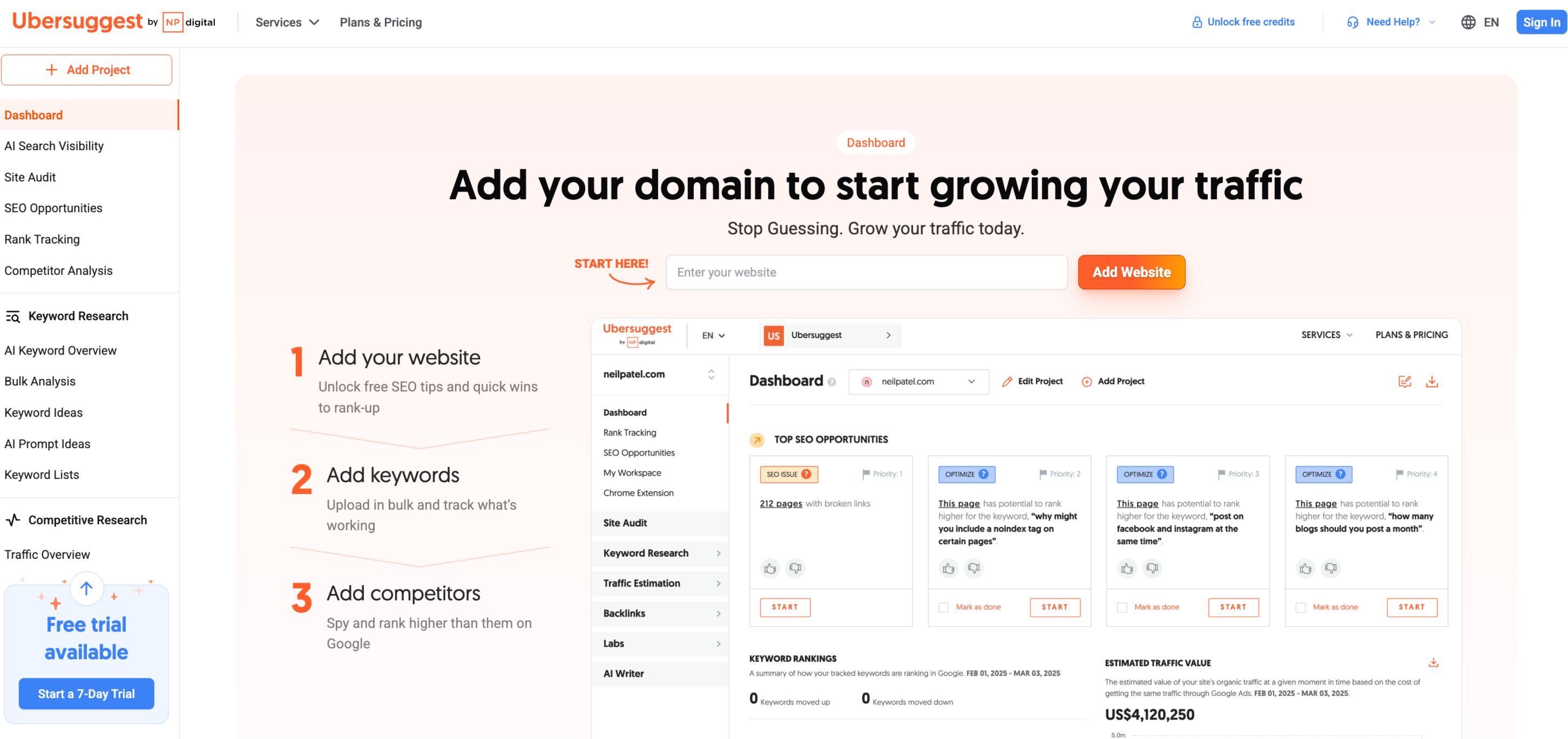
Not every business needs an expensive SEO platform with 50 dashboards and advanced enterprise features.
Sometimes you just need a tool that helps you:
- find keywords
- track rankings
- get content ideas
- and move on with your life
That’s exactly why Ubersuggest still gets recommended so often.
For beginners, startups, and smaller websites, it remains one of the best budget-friendly SEO tools for startups this year because it keeps things simple without making SEO feel intimidating.
Why Small Businesses Like Ubersuggest
A lot of SEO tools for small business owners accidentally create more stress than clarity.
You log in and suddenly feel like you need a marketing degree just to understand the reports.
Ubersuggest avoids a lot of that.
The platform is designed to feel approachable from day one.
You can quickly:
- search keywords
- analyze competitors
- find blog ideas
- monitor traffic
- check backlinks
- track rankings
without spending hours learning the interface.
And honestly, that simplicity is its biggest strength.
Keyword Research Feels Beginner-Friendly
This is where Ubersuggest works really well.
The keyword tools are straightforward enough for beginners but still useful enough for businesses actively trying to grow traffic.
You can quickly uncover:
- low-competition keywords
- question-based searches
- local keyword ideas
- blog content opportunities
- seasonal search trends
without drowning in complicated SEO metrics.
That’s why many people consider it one of the easiest SEO software for small business platforms to start with.
Especially if you’re still learning SEO basics.
The Content Ideas Feature Saves Time
One underrated feature inside Ubersuggest is how fast it helps generate content ideas.
Instead of staring at a blank screen, wondering what to write, you can quickly see:
- top-performing competitor pages
- popular blog topics
- trending keyword ideas
- search demand patterns
That’s useful because content consistency matters far more than publishing one “perfect” article every few months.
And for small businesses trying to grow organically, momentum matters.
It’s One of the Most Affordable SEO Software Tools
This is a huge reason startups love it.
Compared to enterprise-level SEO software for small business growth, Ubersuggest feels much more accessible financially.
You still get:
- keyword tracking
- audits
- backlink data
- SEO suggestions
- competitor insights
Without paying massive monthly fees.
For smaller teams, that tradeoff makes sense.
Downsides You Should Know
Ubersuggest is great for simplicity, but it’s not the deepest SEO platform on this list.
The keyword database is smaller than tools like Semrush One.
The backlink data is lighter.
The competitor research is less advanced.
And businesses running highly competitive SEO campaigns may eventually outgrow it.
But honestly, that’s okay.
Not every business needs enterprise-level complexity right away.
Best For
Ubersuggest is best for:
- beginners
- startups
- bloggers
- freelancers
- local businesses
- small teams wanting affordable SEO software tools
If you want an SEO platform that feels approachable, practical, and easy to use, this is one of the safest starting points.
Pricing
Ubersuggest plans usually start around $49/month, making it one of the cheaper SEO tools small business owners can start with.
And compared to platforms charging hundreds per month, the value feels surprisingly solid for beginners and growing businesses.
Free Trial
Ubersuggest typically offers a free version with limited daily searches, plus trial access for paid plans.
Honestly, if you’re completely new to SEO software for small business websites, this is one of the easiest tools to test without feeling financially trapped.
#5. Google Search Console — Best Free SEO Tool for Small Business Websites
Here’s something a lot of small business owners do not realize:
One of the most valuable SEO tools for small business growth is completely free.
And most people barely use it.
Google Search Console is not flashy. It does not have aggressive AI features, fancy competitor dashboards, or huge marketing campaigns behind it.
But honestly?
It gives you something many paid tools cannot:
Direct insight from Google itself.
That’s a huge deal.
Why Google Search Console Matters So Much
Most SEO software for small business websites estimates data.
Google Search Console shows you actual search performance from your site.
You can see:
- which keywords people find you through
- which pages get clicks
- where rankings are improving
- what pages are losing traffic
- indexing problems
- mobile usability issues
And if you know how to read the data properly, it can uncover massive opportunities.
Especially for smaller businesses trying to grow traffic without spending heavily on expensive software.
It Helps You Find “Hidden” Keyword Opportunities
This is one of the most underrated SEO strategies out there.
A lot of pages already rank for keywords you never intentionally targeted.
Google Search Console helps you spot those opportunities fast.
For example:
- a page ranking #11 for a valuable keyword
- blog posts are getting impressions, but low clicks
- pages slowly climbing in rankings
- search terms bringing unexpected traffic
Sometimes, tiny updates to existing pages create bigger gains than publishing entirely new content.
And honestly, most businesses completely miss these opportunities.
It’s One of the Best Small SEO Tool Keyword Ranking Resources
Now, Google Search Console is not a full keyword tracking platform like SE Ranking or Semrush One.
But for free?
It’s incredibly powerful.
You can monitor:
- average keyword positions
- click-through rates
- impressions
- traffic trends
- search visibility
without paying anything.
That alone makes it one of the best budget-friendly SEO tools for startups this year.
Because free matters when budgets are tight.
Technical SEO Becomes Less Scary
A lot of technical SEO sounds intimidating until you realize Google Search Console explains many issues pretty clearly.
The platform helps identify:
- indexing errors
- mobile usability problems
- crawl issues
- broken pages
- Core Web Vitals concerns
No, you do not need to obsess over every warning.
That’s important.
Some businesses panic the second they see red error messages and suddenly think their website is dying.
Usually, it’s fixable.
And honestly, catching problems early is what matters most.
Downsides You Should Know
Google Search Console is powerful, but it’s not beginner-perfect.
The interface can feel confusing at first.
The reports are less polished than paid SEO software for small business users.
And competitor research is basically nonexistent.
You’ll probably still want another tool alongside it for:
- keyword research
- competitor analysis
- backlink monitoring
- content planning
But as a free foundation, it’s incredibly valuable.
Best For
Google Search Console is best for:
- every small business website
- bloggers
- ecommerce stores
- local businesses
- startups
- anyone serious about SEO
Honestly, even businesses paying for premium SEO software should still use it regularly.
Ignoring it is like owning a car and never checking the dashboard.
Pricing
Google Search Console is completely free.
No subscription. No hidden upgrade. No trial expiration.
That’s rare in the world of SEO tools small business owners use today.
Free Trial
No free trial needed because the platform is free forever.
And honestly, if you only use one SEO tool from this entire list today, start here first. It gives you direct visibility into how Google actually sees your website — and that’s information every business should pay attention to.
#6. Mangools — Best Simple SEO Tool for Keyword Ranking Tracking
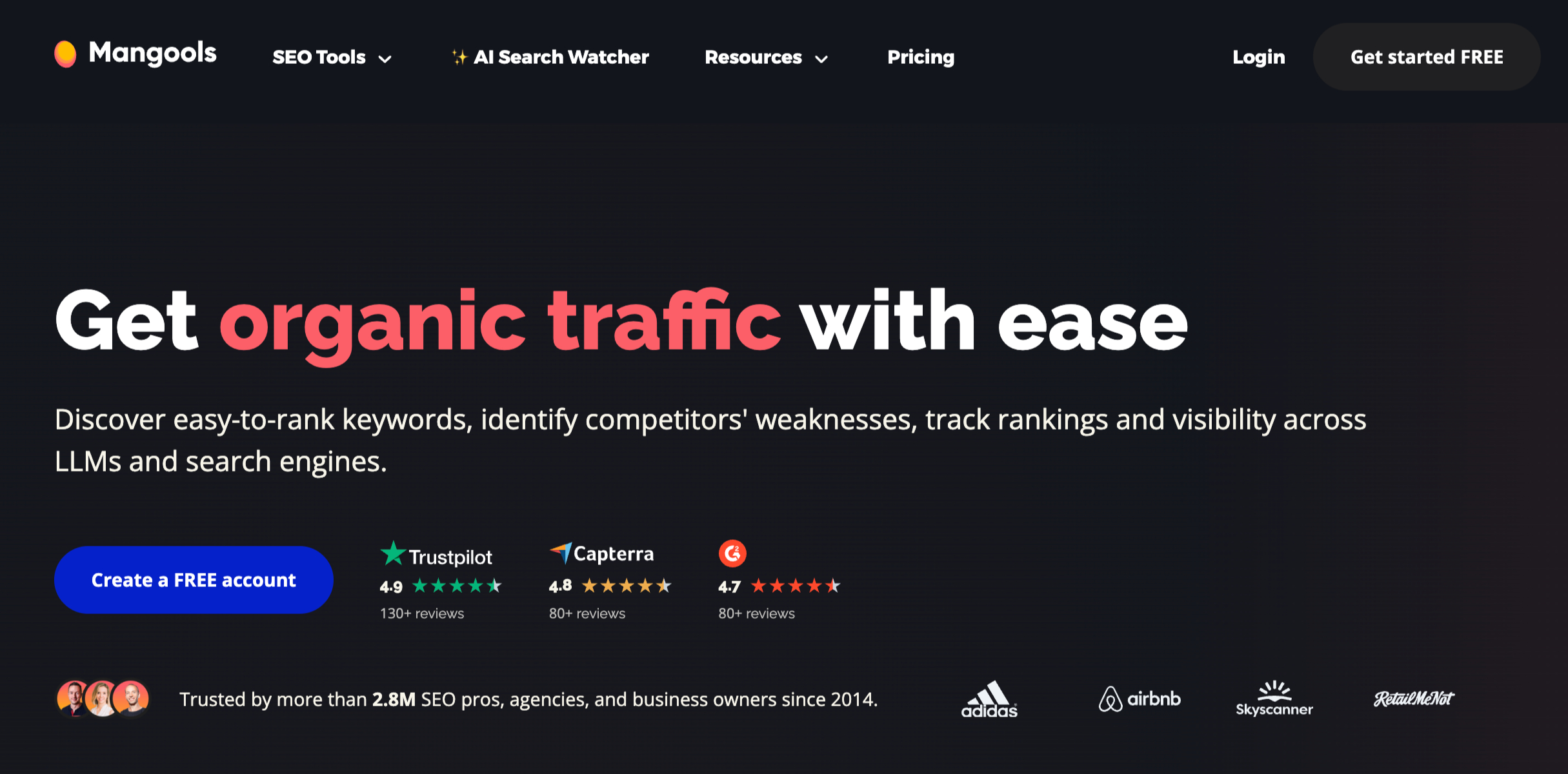
There’s a reason people stick with Mangools for years.
It doesn’t try to impress you with a million dashboards.
It just helps you do SEO without making your brain hurt.
Honestly, that alone makes it one of the best SEO tools for small business owners in 2026.
Because let’s be real for a second…
A lot of SEO software for small business websites feels exhausting. You log in, and suddenly you’re hit with:
- traffic graphs
- optimization scores
- audit warnings
- backlink reports
- AI recommendations
- random metrics you’ll probably never use
Mangools skips most of that noise.
And after testing a bunch of bloated SEO platforms over the years, I’ve started appreciating tools that feel lightweight and fast way more than tools trying to become “the everything app.”
Why Mangools Works So Well for Small Businesses
Mangools focuses on the stuff most businesses actually care about:
- finding keywords
- checking rankings
- spying on competitors
- and figuring out whether your SEO is improving
That’s it.
No giant learning curve.
No confusing setup process.
No feeling like you need a full SEO course before clicking anything.
You open the tool and immediately know where to go.
That matters more than people think.
Because the best SEO software for small business owners is usually the one they consistently use every week, not the one with the longest feature list.
KWFinder Is the Real Star
If you ask longtime Mangools users what keeps them paying, most will probably mention KWFinder.
And honestly? Fair.
It’s one of the easiest keyword research tools on the internet.
You type in a keyword and quickly find:
- lower competition opportunities
- long-tail searches
- local SEO keywords
- blog ideas
- easy traffic opportunities
Without drowning in complicated data.
This is huge for beginners because many SEO tools overload users with metrics before they even know what they’re looking at.
Mangools keeps keyword research approachable.
That’s why it’s become one of the most recommended affordable SEO software tools for bloggers, freelancers, and smaller businesses.
The Rank Tracking Is Surprisingly Addictive
This is where people quietly get hooked.
Mangools makes tracking rankings feel simple and satisfying.
Its SERPWatcher feature lets you monitor:
- keyword movements
- SEO visibility
- local rankings
- competitor changes
Without needing enterprise-level reporting dashboards.
And honestly, for most small businesses, that’s enough.
You do not always need ultra-advanced analytics.
Sometimes you just want to know:
“Are we moving up or not?”
Mangools answers that quickly.
It Respects Your Time
This might honestly be Mangools’ biggest advantage over larger SEO tools.
It respects your attention span.
You can log in, do your research, track rankings, and leave without falling into a rabbit hole of reports and recommendations for three hours.
That’s rare in modern SEO software for small business users.
Especially now that so many platforms are trying to pack AI into every corner of the dashboard, whether you need it or not.
Downsides You Should Know
Mangools is intentionally lightweight.
That’s both the strength and the limitation.
If you need:
- advanced technical SEO audits
- deep automation
- huge backlink databases
- enterprise reporting
- AI content workflows
You’ll probably outgrow it eventually.
But honestly, many small businesses never need that level of complexity anyway.
Best For
Mangools is best for:
- beginners
- bloggers
- freelancers
- local businesses
- startups
- business owners who want simple SEO tools without overwhelm
If your biggest SEO problem is confusion, this tool fixes that fast.
Pricing
Mangools plans usually start around $61/month, making it one of the more affordable SEO software tools on this list.
And compared to platforms charging $100+ monthly for features most businesses never touch, the pricing feels refreshingly reasonable.
Free Trial
Mangools typically offers a 10-day free trial with limited daily searches so you can test the platform first.
Honestly, if you’ve been overwhelmed by complicated SEO tools for small business growth, this is probably one of the easiest platforms to try without feeling instantly lost.
#7. Surfer SEO — Best SEO Software for Small Business Content Optimization
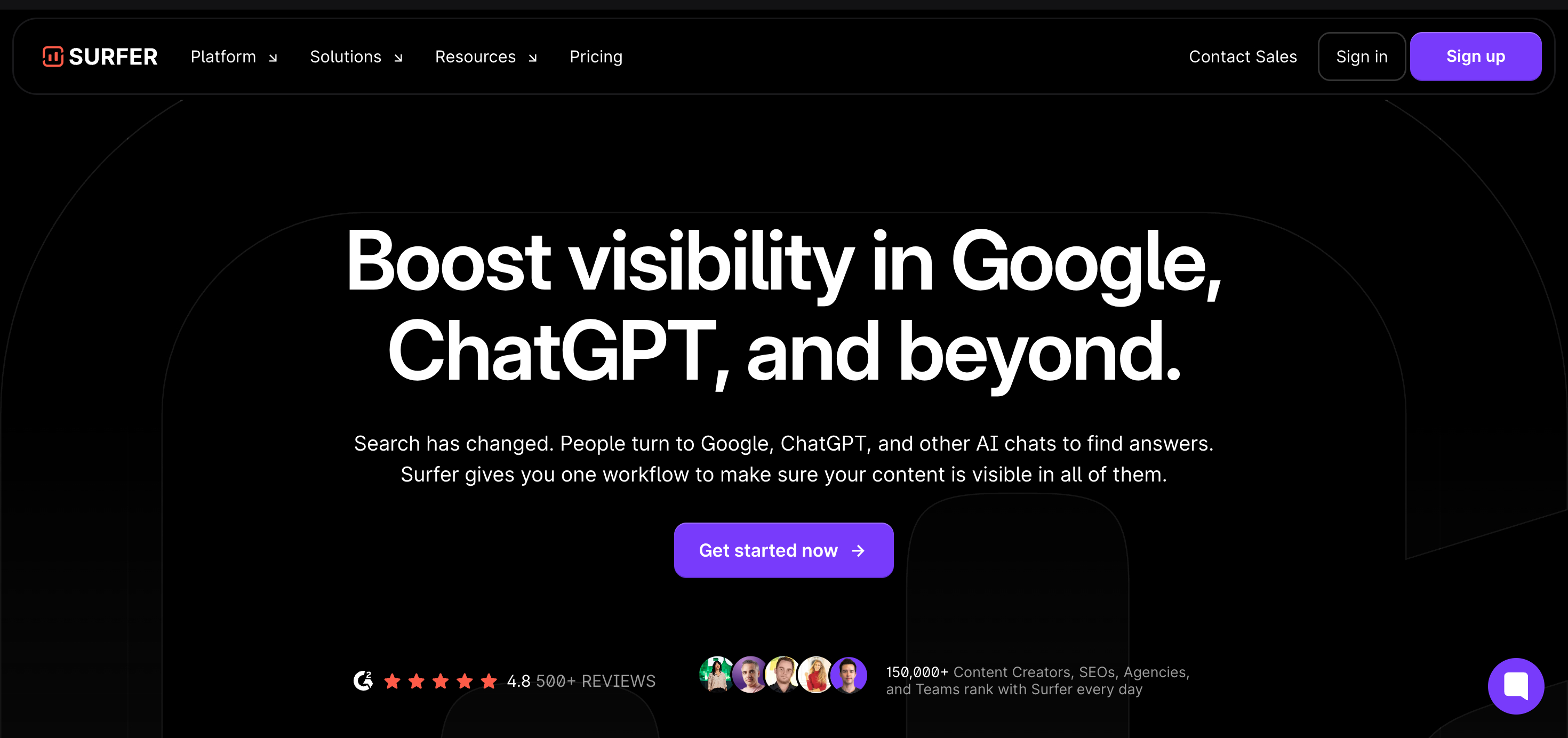
Here’s the truth about SEO in 2026:
Writing “good content” is no longer enough.
Google is flooded with AI articles, recycled blog posts, and websites all targeting the exact same keywords. So if your content is missing important topics, weakly structured, or barely answers the search intent, it gets buried fast.
That’s why Surfer SEO exploded.
And honestly, for content-heavy businesses, it’s one of the most useful SEO tools for small business growth right now.
Not because it magically ranks articles overnight.
But it dramatically cuts down the guesswork.
Why So Many Businesses Use Surfer SEO
Most businesses waste a ridiculous amount of time trying to figure out:
- what topics to include
- how long content should be
- which keywords matter
- what competitors are doing differently
Surfer pulls a lot of that into one place.
You type in your target keyword, and the platform analyzes top-ranking pages to show patterns across:
- headings
- keyword usage
- topical coverage
- structure
- search intent
- related phrases
Basically, it helps answer:
“What does Google already seem to reward for this topic?”
That’s incredibly useful when creating blog content consistently.
It Makes Content Optimization Less Confusing
A lot of SEO software for small business users focuses heavily on technical SEO and backlinks.
Surfer focuses on content.
And honestly, that’s where many businesses struggle most.
The platform gives live recommendations while you write, helping you improve:
- topical relevance
- keyword placement
- content depth
- readability
- structure
Without needing to manually study ten competitor articles first.
That alone can save hours every week.
Especially for smaller teams creating content regularly.
The Content Editor Is the Main Reason People Stay
This is where Surfer really shines.
The editor feels less like a complicated SEO dashboard and more like having an SEO strategist sitting beside you while you write.
It nudges you toward:
- missing subtopics
- weak sections
- content gaps
- underused keywords
Without making optimization feel overwhelming.
And compared to many affordable SEO software tools trying to bolt AI onto old platforms, Surfer feels far more focused and intentional.
But Here’s the Important Warning
A lot of people misuse Surfer SEO.
They become obsessed with content scores.
That’s dangerous.
Because if you blindly stuff every recommended keyword into an article, your writing starts sounding robotic fast.
And honestly, readers notice that immediately.
The best way to use Surfer is as a guide — not a rulebook.
It should help support genuinely useful writing, not replace human judgment.
AI Features Are Helpful When Used Correctly
Like most modern SEO tools small business owners use today, Surfer has leaned heavily into AI features.
Some are genuinely useful:
- content outlines
- optimization suggestions
- NLP keyword recommendations
- content expansion ideas
But honestly, AI works best when it speeds up research and structure — not when it tries to fully replace your voice.
That’s where many businesses go wrong in 2026.
They automate everything and accidentally publish content that feels lifeless.
Downsides You Should Know
Surfer SEO is excellent for content optimization, but it’s not a full all-in-one SEO platform.
You’ll still likely need separate tools for:
- backlink analysis
- technical SEO
- keyword tracking
- competitor research
Pricing can also feel expensive if you only publish a few blog posts each month.
And beginners sometimes over-focus on optimization scores instead of actual usefulness.
Best For
Surfer SEO is best for:
- bloggers
- agencies
- content marketers
- startups scaling content
- businesses heavily focused on organic traffic
If content marketing is a major growth channel for your business, this is one of the strongest SEO software for small business content teams available right now.
Pricing
Surfer SEO plans usually start around $49/month, depending on article limits and AI usage.
It’s not the cheapest tool on this list, but for businesses publishing content consistently, the time savings alone can easily justify the cost.
Free Trial
Surfer SEO occasionally offers free trials, demos, or discounted entry plans for new users.
Honestly, if your biggest SEO bottleneck is creating optimized content consistently, this is one of the best SEO software for small business websites worth testing first.
No free trial, but they offer a money-back guarantee. Optimize your content with Surfer.
How to Choose the Right SEO Tools for Small Business Growth
One of the biggest mistakes small businesses make is assuming they need the “most powerful” SEO tool.
Usually, they don’t.
They just need the right one for the way they actually work.
Because honestly, the best SEO software for small business owners is not always the platform with the biggest feature list. It’s the one that solves your biggest bottleneck without slowing you down.
That’s the difference.
Some businesses need help creating content faster.
Others need keyword tracking.
Others just want to know why their traffic disappeared last month.
Different problem. Different tool.
If You Want an All-In-One SEO Platform
Go with Semrush One.
This is probably the strongest option for businesses wanting:
- keyword research
- competitor analysis
- local SEO
- content tools
- PPC insights
- reporting
all in one place.
Yes, it’s more expensive than some affordable SEO software tools on this list.
But if you’re replacing multiple subscriptions with one platform, the value starts making more sense quickly.
Best for:
- growing businesses
- agencies
- ecommerce brands
- marketing teams
If You’re Focused Heavily on Content Marketing
Go with Surfer SEO or Search Atlas.
These tools are built for businesses that create lots of content consistently.
Choose Surfer SEO if you want:
- content optimization
- SEO writing guidance
- competitor content analysis
- simpler workflows
Choose Search Atlas if you want:
- stronger AI workflows
- topical authority mapping
- automation
- scalable content systems
Honestly, this category matters more than ever because content production in 2026 is moving ridiculously fast.
If You Want Affordable SEO Software Tools Without Overwhelm
Go with SE Ranking, Mangools, or Ubersuggest.
These are probably the safest options for smaller businesses and startups that want useful SEO insights without enterprise-level complexity.
Here’s the quick breakdown:
- SE Ranking: Best balance of affordability and serious functionality.
- Mangools: Best for simplicity and easy keyword research.
- Ubersuggest: Best beginner-friendly platform for learning SEO basics.
And honestly, most businesses can grow quite far using tools in this pricing range before needing anything more advanced.
If You Care Most About Small SEO Tool Keyword Ranking Tracking
Go with SE Ranking or Mangools.
Both make keyword tracking much easier to understand without flooding you with unnecessary reports.
That matters because ranking data becomes useless if you avoid checking it because the platform feels overwhelming.
If Your Budget Is Tight
Start with:
- Google Search Console
- Ubersuggest
- Mangools
This is honestly enough for many small businesses early on.
A lot of people buy expensive SEO software for small business growth way too early, before they even have:
- consistent content
- a clear strategy
- optimized service pages
- basic keyword targeting
You do not need expensive tools to start improving SEO.
You need consistency.
My Honest Advice After Testing Too Many SEO Tools
Simple tools usually get used more consistently.
That’s important.
A giant enterprise platform packed with advanced features sounds impressive until you realize you only log in once a month because it feels exhausting.
Meanwhile, businesses using simpler SEO tools for small business growth often move faster because they spend less time analyzing and more time publishing, optimizing, and improving.
That’s usually what wins long-term.
SEO Tools Small Businesses Probably Don’t Need
This part might save you more money than the rest of this article combined.
Because honestly?
A lot of small businesses are paying for SEO software they barely use.
Not because the tools are bad.
But because the tools were never built for them in the first place.
And this happens constantly in SEO.
Business owners see giant feature lists, fancy dashboards, AI promises, and “enterprise-grade analytics”, and assume more features automatically mean better results.
Usually, it just means more confusion.
Enterprise SEO Platforms With Massive Learning Curves
Some SEO software for small business websites feels like it was designed for companies with:
- full SEO departments
- dedicated analysts
- weekly reporting meetings
- multiple marketing teams
That’s not most small businesses.
If your company has:
- a small team
- limited time
- limited budget
- and a simple SEO strategy
You probably do not need enterprise-level complexity.
And honestly, paying for hundreds of features you never touch is one of the fastest ways to waste money in SEO.
AI SEO Tools Promising “One-Click Rankings”
This trend got completely out of control in 2026.
Suddenly, every platform started claiming AI could:
- automate SEO
- generate perfect content
- replace strategy
- rank pages instantly
Most of that is marketing hype.
AI can absolutely help with:
- research
- outlines
- optimization
- keyword clustering
- scaling workflows
But no SEO software for small business growth magically replaces:
- useful content
- clear messaging
- search intent
- trust
- consistency
And honestly, readers can still tell when content feels generic and lifeless.
Platforms That Try to Do Everything
This is another common trap.
Some SEO tools keep adding:
- social media features
- email marketing
- CRM tools
- PPC management
- AI chat systems
- website builders
until the platform becomes bloated and exhausting to use.
That’s why many small business owners eventually move back toward simpler, affordable SEO software tools like Mangools, SE Ranking, or Ubersuggest.
Focused tools often create less friction.
And less friction usually means more action.
Obsessing Over Tiny SEO Metrics
This one is huge.
A lot of businesses waste hours stressing over:
- SEO scores
- authority metrics
- optimization percentages
- keyword density
- audit grades
while completely ignoring:
- content quality
- customer intent
- conversions
- actual business growth
Honestly, some SEO tools accidentally encourage overthinking instead of progress.
The best SEO tools for small business owners should help you prioritize what matters — not trap you inside endless reports.
What Small Businesses Usually Need Instead
Most businesses grow SEO faster by focusing on a few simple things consistently:
- publishing genuinely useful content
- targeting realistic keywords
- improving service pages
- fixing obvious website issues
- earning trust over time
That’s it.
And honestly, simpler SEO software for small business users often supports that process better than giant enterprise platforms packed with distractions.
Because at the end of the day, the best SEO tool is usually the one you’ll actually keep using after the first month.
My Recommended SEO Stack for Small Businesses in 2026
Here’s something most SEO “experts” never admit:
You usually do not need one giant platform that does everything.
In fact, a lot of small businesses get better results combining a few focused tools instead of paying for bloated software packed with features they never touch.
That’s especially true now that SEO tools for small business owners have become more specialized.
Some tools are great for:
- keyword research
- content optimization
- rank tracking
- local SEO
- technical fixes
And honestly, trying to force one platform to handle all of it perfectly usually creates frustration.
So here’s the SEO stack I’d actually recommend depending on your stage and budget.
Simple Free SEO Stack
Best for:
- brand-new businesses
- startups
- side projects
- local businesses testing SEO
Recommended Tools
- Google Search Console
- Ubersuggest free plan
- Mangools free trial
This setup is honestly enough to learn:
- keyword basics
- ranking trends
- search performance
- competitor research
- content opportunities
without spending hundreds every month.
A lot of businesses rush into expensive SEO software for small business growth before they even publish content consistently.
That’s backwards.
Master the basics first.
Budget-Friendly SEO Stack
Best for:
- growing startups
- bloggers
- freelancers
- businesses publishing content regularly
Recommended Tools
- SE Ranking
- Mangools
- Google Search Console
This is probably the sweet spot for many smaller businesses in 2026.
You get:
- keyword research
- small SEO tool keyword ranking tracking
- competitor analysis
- site audits
- backlink monitoring
- local SEO insights
without paying enterprise-level prices.
And honestly, this combination feels way less overwhelming than giant all-in-one platforms.
Content Marketing SEO Stack
Best for:
- content-heavy businesses
- affiliate sites
- agencies
- brands scaling blog traffic
Recommended Tools
- Surfer SEO
- Search Atlas
- Google Search Console
This setup works really well for businesses focused heavily on organic content growth.
You can:
- build topical authority
- optimize articles faster
- identify content gaps
- improve rankings
- scale publishing workflows
without manually doing every part of the SEO process.
And in 2026, speed matters a lot.
Businesses publishing useful content consistently usually outperform businesses stuck endlessly “planning” content strategies.
All-In-One Growth Stack
Best for:
- agencies
- ecommerce brands
- larger small businesses
- multi-location businesses
Recommended Tools
- Semrush One
- Google Search Console
- Surfer SEO
This stack gives you almost everything:
- competitor research
- keyword tracking
- content optimization
- local SEO
- PPC insights
- reporting
- technical audits
It’s definitely more expensive than some affordable SEO software tools on this list, but for growing businesses managing multiple marketing channels, it can replace several separate subscriptions.
The Most Important Thing Most Businesses Ignore
The tool matters less than consistency.
Seriously.
A business publishing one useful article every week using simple SEO software for small business growth will usually outperform businesses that constantly buy new tools but rarely execute.
That’s the trap a lot of people fall into.
They keep searching for the “perfect” platform instead of building momentum.
And honestly, momentum is what usually wins in SEO.
Conclusion: The Best SEO Tool Is the One You’ll Actually Use
After testing more SEO tools than I’d like to admit, here’s the biggest thing I’ve learned:
Most small businesses do not need more SEO features.
They need less friction.
That’s it.
The best SEO software for small business owners is not necessarily the most advanced platform or the one with the biggest dashboard. It’s the tool that helps you:
- find opportunities faster
- create useful content consistently
- track progress clearly
- and actually take action every week
Because honestly, that’s where results come from.
Not from staring at reports for three hours.
Not from chasing perfect SEO scores.
And definitely not from buying expensive software you barely open after the first month.
If you want the simplest possible starting point:
- start with Google Search Console
- add Mangools or Ubersuggest
- and focus on consistency first
If you’re ready for more advanced growth:
- SE Ranking offers one of the best balances of price and functionality
- Semrush One works well for businesses wanting everything in one place
- Surfer SEO and Search Atlas are excellent for scaling content faster
The important thing is not picking the “perfect” tool.
It’s picking SEO tools for small business growth that match your workflow, budget, and actual goals.
Because the businesses winning with SEO in 2026 are usually not the ones with the fanciest software.
They’re the ones consistently publishing helpful content, improving their websites, and showing up week after week while everyone else keeps searching for shortcuts.