Affiliate Disclosure: This article contains affiliate links. If you choose to sign up for WordPress.com through these links, I may earn a small commission at no additional cost to you.
Have you been thinking about starting a blog but haven’t taken the first step yet because everything seems too technical?
You’re not alone.
When I first explored blogging, I assumed writing content would be the biggest challenge. But I soon found myself researching hosting, domain names, website security, software updates, and many other things that come with running a website. At times, it felt more complicated than I expected.
Over the years, I’ve realized that successful bloggers spend most of their time creating useful content and growing their audience, not dealing with technical issues.
That’s one reason many beginners choose WordPress.com. It takes care of hosting, security, and software updates, so you can spend more time working on your blog and less time managing the website behind it.
If you’re wondering whether it’s still possible to make money blogging in 2026, the answer is yes. The opportunity is still there for people who choose the right niche, publish valuable content, and stay consistent.
In this guide, I’ll walk you through exactly how to start a WordPress.com blog and set it up to earn income over time.
Let’s go.
Here’s a table of contents for quick navigation:
Why WordPress.com Is Still One of the Best Places to Start a Money-Making Blog
Most people never fail at blogging because they can’t write.
They fail because they get stuck before they publish a single post.
One minute, they’re excited about starting a blog. Next, they’re watching YouTube videos about web hosting, comparing website builders, reading reviews about security plugins, and trying to figure out what a DNS record is.
A week later, they still don’t have a blog.
Sound familiar?
If your goal is to build a blog that can eventually make money, you don’t need the most advanced setup on the internet. You need a platform that lets you get online quickly and focus on creating content.
That’s where WordPress.com comes in.
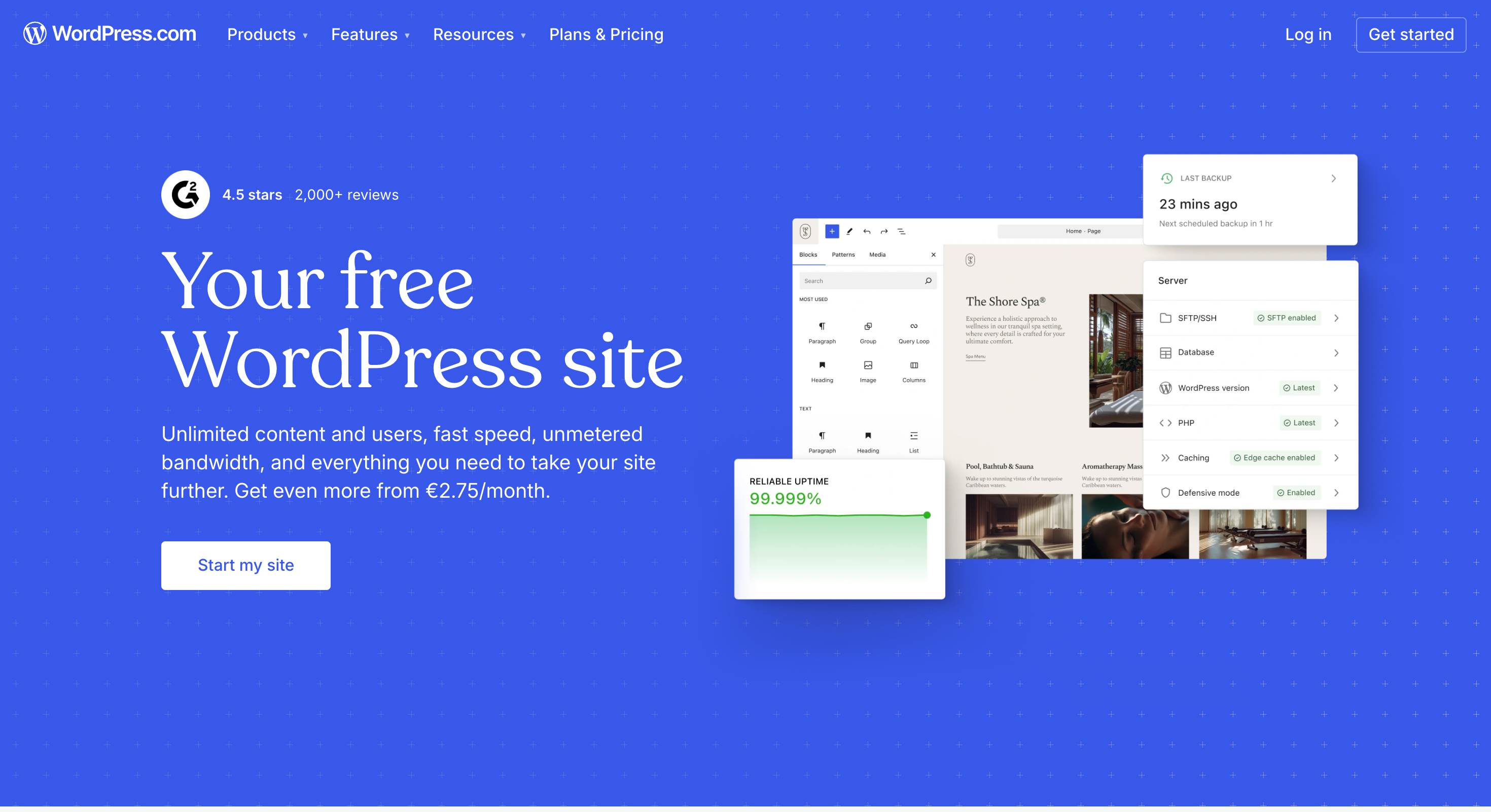
Instead of making you buy hosting separately, install software, manage updates, monitor security, and handle technical maintenance, WordPress.com takes care of those jobs for you.
The platform manages hosting, software updates, and security behind the scenes so you can spend your time writing posts, attracting readers, and learning how blogging actually works.
Think of it like renting an apartment versus building a house from the ground up.
Could you build the house yourself? Sure.
But if your goal is simply to move in and start living, renting is a lot faster.
That’s the role WordPress.com plays for many new bloggers.
WordPress.com vs. WordPress.org: The Simple Explanation
You’ll probably see people arguing about WordPress.com and WordPress.org online.
Here’s the easy version.
WordPress.org gives you complete control over your website, but you’re responsible for finding hosting, setting up your site, maintaining security, performing updates, and fixing problems when they happen.
WordPress.com bundles those responsibilities into one service.
For a new blogger who wants to focus on publishing content and building traffic, that’s a huge advantage.
Who Should Use WordPress.com?
WordPress.com is especially well-suited for:
- First-time bloggers
- Freelancers building a personal brand
- Hobby bloggers
- Content creators
- Small business owners
- Anyone who wants a website without managing hosting and security
In other words, if you’d rather focus on writing than website maintenance, you’ll probably appreciate what WordPress.com offers.
Which WordPress.com Plan Should Beginners Choose?
For most new bloggers, the Personal plan is the best starting point.
It includes a custom domain name and access to the core WordPress.com features you’ll need to launch a professional-looking blog.
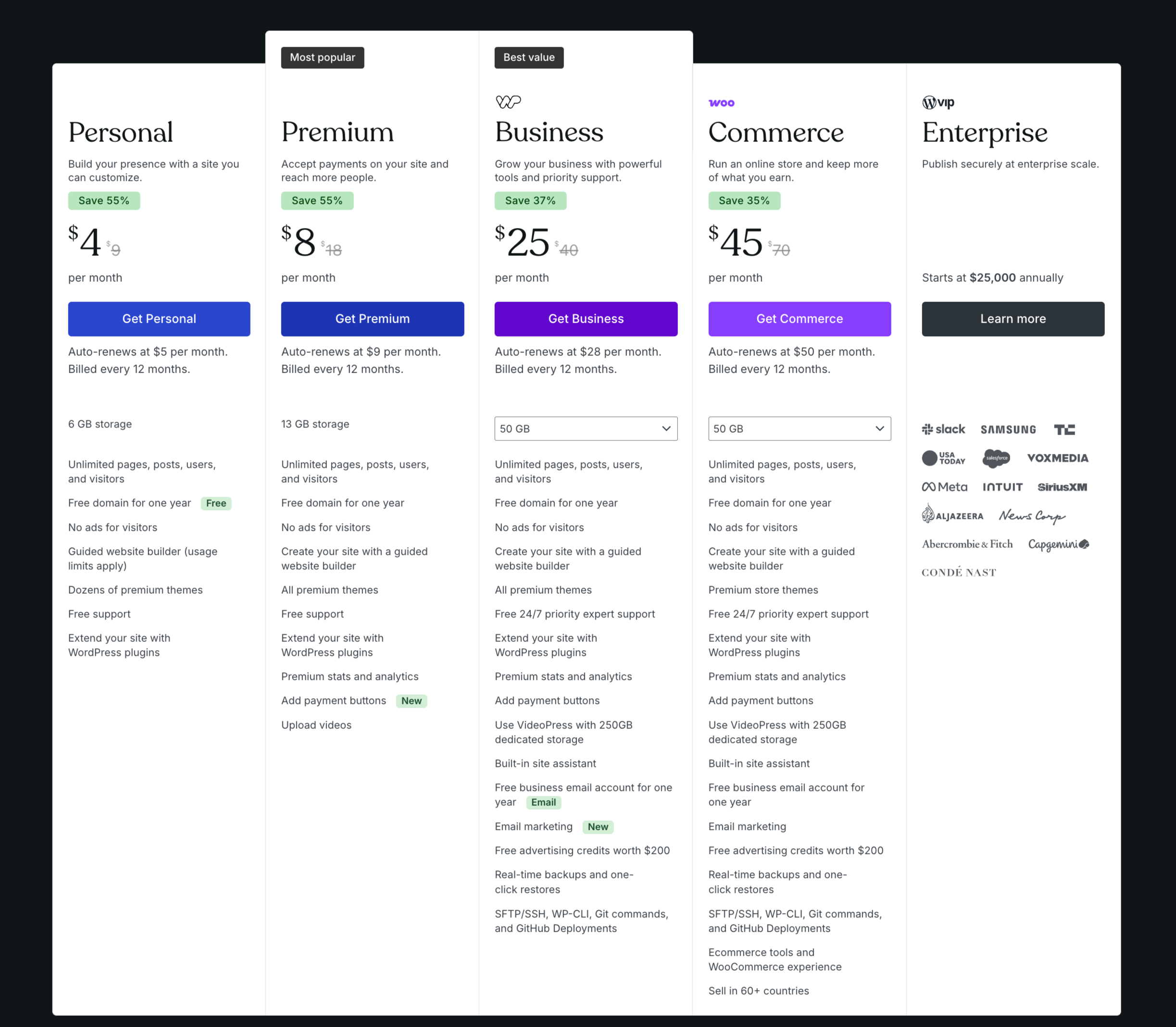
Current pricing is:
- Personal: $9/month or $4/month billed annually
- Premium: $18/month or $8/month billed annually
- Business: $25/month billed annually
- Commerce: $45/month billed annually
The mistake many beginners make is assuming they need the most expensive plan from day one.
You don’t.
A blog earns money because of the content you publish, the audience you build, and the problems you solve for readers—not because you’re paying for the highest-tier plan.
Start simple. Learn the process. Publish consistently.
You can always upgrade later when your traffic and income justify it.
Note:
- Since April 2026, WordPress.com has made plugin installation available on all paid plans, including the Personal plan, which starts at $4 per month when billed annually. This allows users access to more than 50,000 plugins in the WordPress plugin directory, including popular options like Rank Math, WPForms, WooCommerce, contact form plugins, social sharing tools, and many other business-focused plugins.
- That said, WordPress.com does not allow every plugin. Some plugins that require advanced server-level access, certain caching solutions, or plugins that are considered potential security risks may be blocked. WordPress.com does not publish a complete list of restricted plugins, so in most cases, you’ll only know whether a plugin is supported when you attempt to install it.
Step 1: Choose a Profitable Blog Niche
Before you register a domain name or customize your blog, you need to answer one important question:
What will your blog actually be about?
This might seem obvious, but it’s where many new bloggers go wrong.
They start a blog about “everything.” One week, they write about fitness. The next week it’s productivity. Then they publish a travel post, a movie review, and a recipe.
The problem?
Readers don’t know what the blog is for. Search engines don’t know what the blog is about. And building a loyal audience becomes much harder.
The blogs that make money usually have a clear focus.
That doesn’t mean you need to pick an ultra-specific topic you’ll be stuck with forever. It simply means choosing a main subject that attracts a certain type of reader.
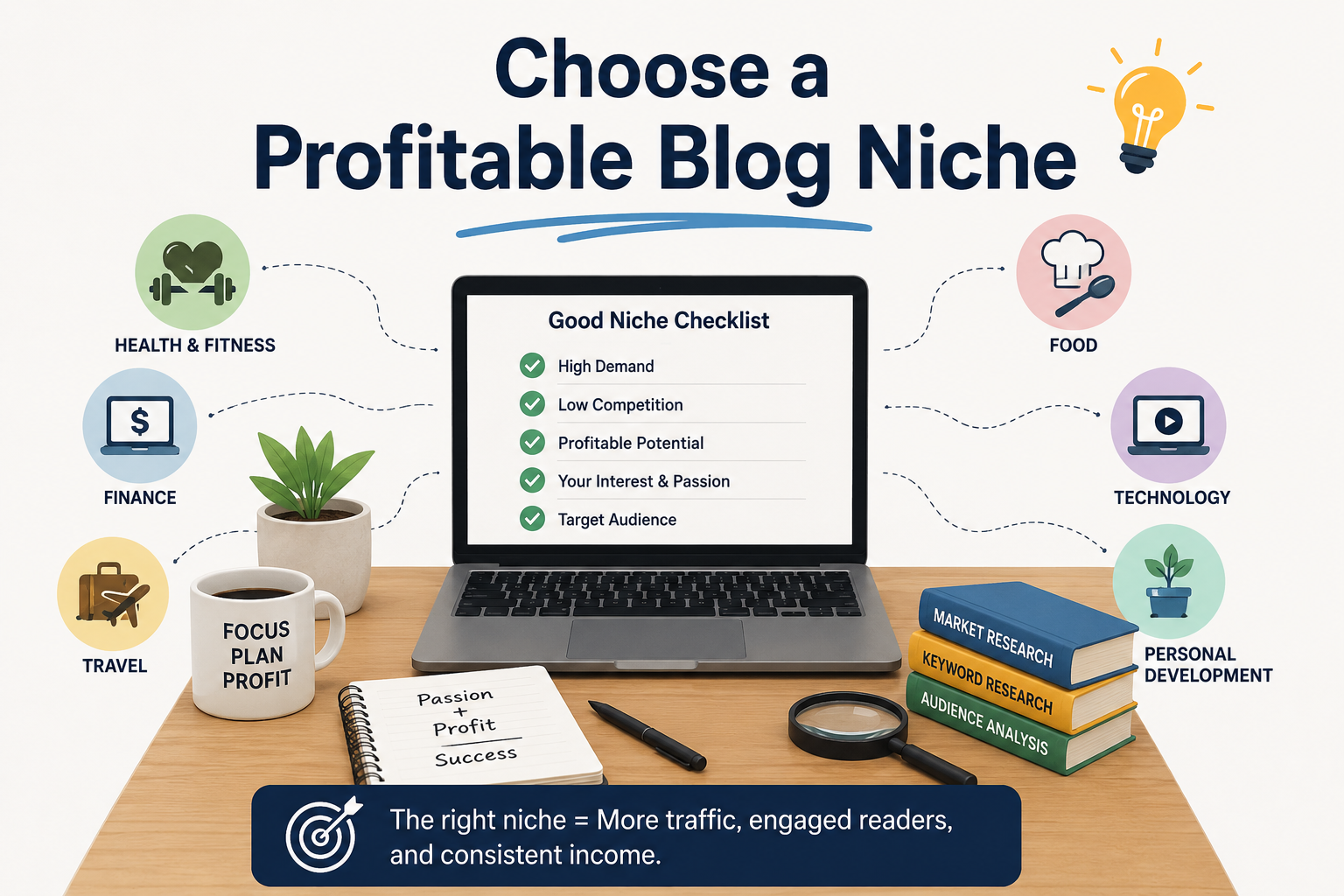
Start With the Intersection of Three Things
A profitable niche often sits where these three areas overlap:
- Topics you enjoy learning or talking about
- Topics people actively search for
- Topics connected to products, services, or solutions that people spend money on
Miss one of those pieces and things get difficult.
For example, you might love collecting rare bottle caps, but if very few people are searching for information about them, growing traffic could be a challenge.
On the other hand, choosing a niche purely because it’s profitable can backfire if you have zero interest in the subject. Most bloggers underestimate how much content they’ll need to create before seeing meaningful results.
Profitable Blog Niches in 2026
While almost any niche can generate income with the right approach, some categories consistently offer strong earning potential:
Personal Finance
People are always looking for ways to save money, invest, reduce debt, and improve their financial situation.
Health and Wellness
Fitness, nutrition, mental health, healthy habits, and wellness-related topics continue to attract large audiences.
Technology and AI
New tools, software, automation platforms, and AI applications create endless opportunities for content.
Business and Entrepreneurship
Many readers are willing to invest in tools, courses, and services that help them grow a business.
Career Development
Job seekers and professionals actively search for advice on resumes, interviews, skills, and career growth.
Home and Lifestyle
Home improvement, organization, decorating, and everyday living topics remain popular year after year.
Don’t Chase Trends Alone
A niche that explodes overnight can disappear just as quickly.
That’s why evergreen topics tend to be safer for beginners.
For example, people needed help budgeting five years ago, and they’ll likely need help budgeting five years from now.
The same applies to health, relationships, careers, and business.
A trend can bring short-term traffic.
An evergreen niche can help build a long-term business.
A Simple Test Before You Commit
Ask yourself these questions:
Can I realistically write 50 blog posts about this topic?
Would I still be interested in it six months from now?
Are people spending money to solve problems in this niche?
If the answer is yes to all three, you’re probably heading in the right direction.
Remember, your niche doesn’t have to be perfect.
Many successful bloggers refine their focus over time.
What’s important is choosing a direction and getting started. A good niche today is worth far more than the perfect niche you’re still thinking about six months from now.
Step 2: Create Your WordPress.com Account
Now for the fun part.
At this stage, you’re only a few minutes away from having your blog online.
One reason many beginners choose WordPress.com is because the setup process is surprisingly simple. You don’t need to buy hosting from one company, register a domain from another, and then connect everything together yourself.
WordPress.com brings those pieces under one roof.
Sign Up for a WordPress.com Account
Head to the WordPress.com website and click the button to create an account.
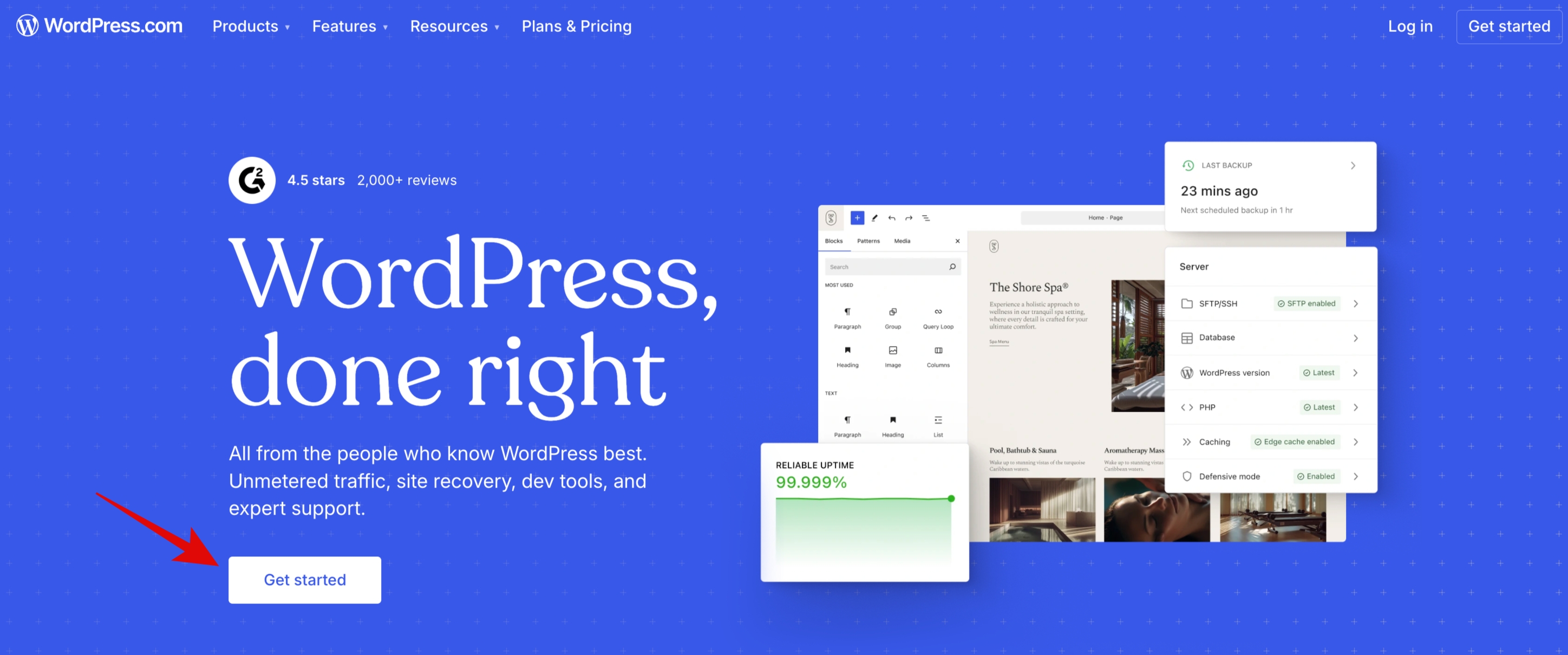
You’ll be asked for basic information such as:
- Your email address
- A username
- A password
Once you’ve created your account, WordPress.com will guide you through the process of creating your new website.
Don’t overthink any of the early customization choices.
The goal right now isn’t perfection.
The goal is to get your blog live.
Choose Your Blog Name

Your blog name is usually the first thing people notice.
Ideally, it should be:
- Easy to remember
- Easy to spell
- Relevant to your niche
- Broad enough to grow with your content
For example, if you’re creating a personal finance blog, a name like “Smart Money Path” gives you more flexibility than something extremely narrow like “How To Save Money On Coffee.”
A simple, clear name almost always beats a clever but confusing one.
Select Your Domain Name
Your domain name is your blog’s address on the internet.
For example:
yourblog.com
When choosing a domain:
- Keep it short when possible
- Avoid numbers and hyphens
- Make it easy to pronounce
- Choose a .com extension if available
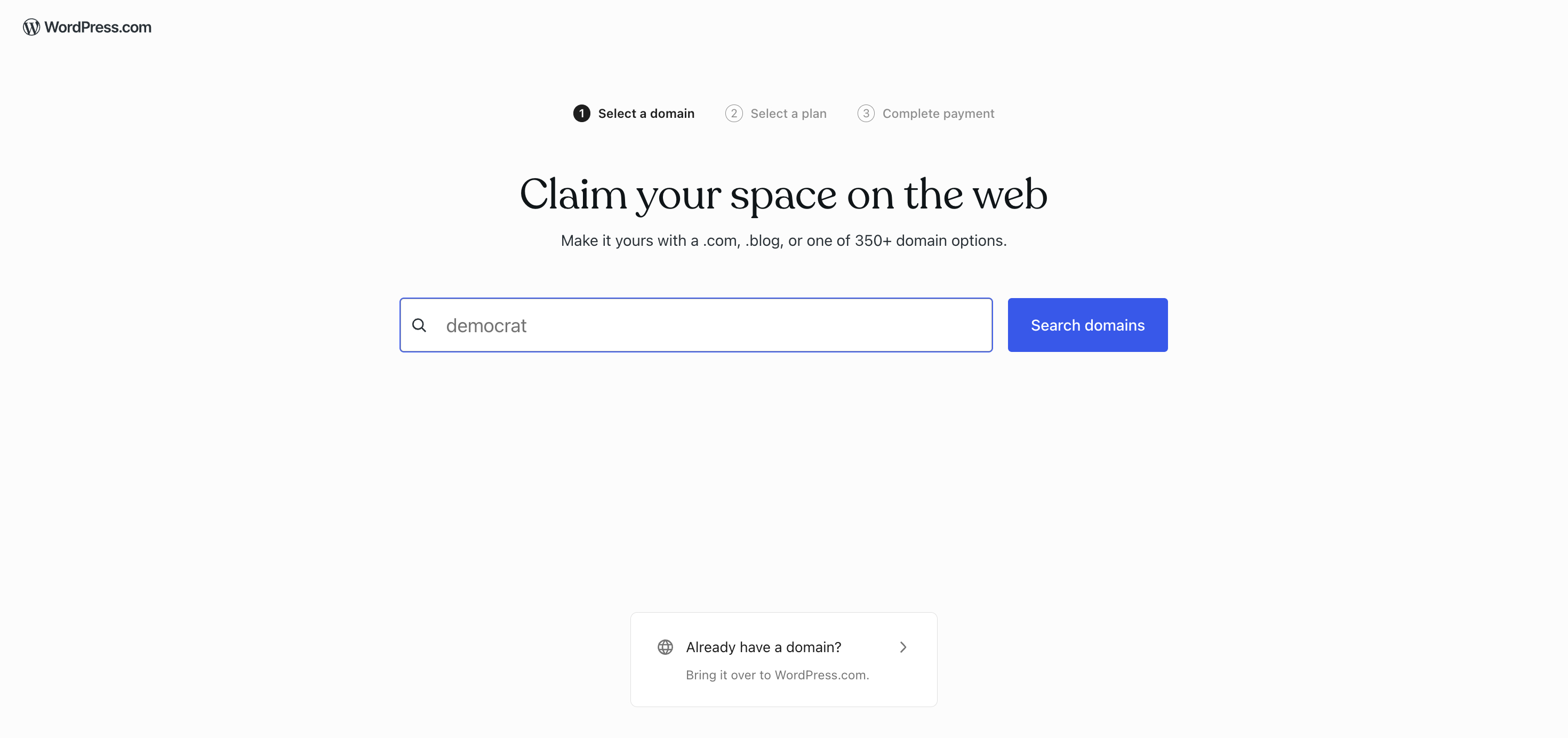
Don’t spend weeks searching for the perfect domain.
Many successful blogs started with names that seemed ordinary at first.
The content and brand you build around the domain matter far more than the domain itself.
Pick a WordPress.com Plan
At some point during setup, WordPress.com will ask you to choose a plan.
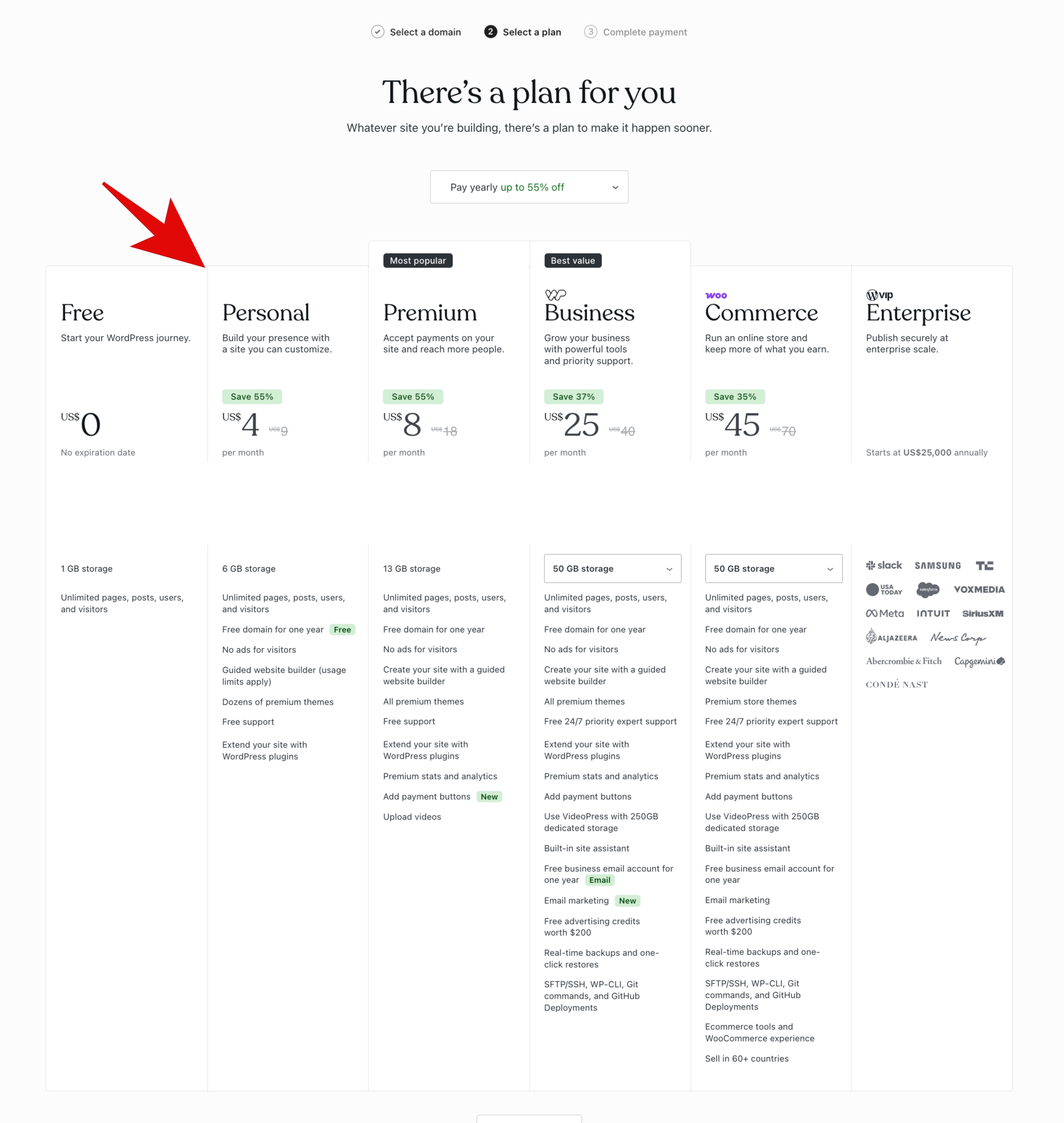
If you’re serious about building a blog that can eventually earn money, the Personal plan is usually the best place to start.
It includes:
- A custom domain name
- Access to WordPress.com’s core features
- A professional appearance without WordPress.com branding in your domain
Here are the current WordPress.com plan prices:
Free Plan: Price: $0 (Basic site, includes WordPress ads, 1 GB storage)
Paid Plans (Monthly vs. Annual Breakdown)
| Plan | Billed Monthly | Billed Yearly (Per Month) | Billed 2 Years (Per Month) | Billed 3 Years (Per Month) | Included Storage |
|---|---|---|---|---|---|
| Personal | $9.00 | $4.00 | $3.25 | $2.75 | 6 GB |
| Premium | $18.00 | $8.00 | $6.50 | $5.50 | 13 GB |
| Business | $40.00 | $25.00 | $20.00 | $17.50 | 50 GB |
| Commerce | $70.00 | $45.00 | $36.00 | $31.50 | 50 GB |
Note: All paid plans include a free custom domain for the first year if you commit to an annual term or longer.
You can always upgrade later as your blog grows.
Many new bloggers make the mistake of paying for features they don’t need yet. Instead, invest your time in creating useful content and attracting readers.
That’s what moves the needle in the early days.
Congratulations, Your Blog Exists 🥳
This is the moment many people never reach.
You now have something real.
Not a plan.
Not an idea.
A blog.
It may not be perfect yet, and that’s okay.
Every successful blog you admire started as a brand-new website with zero visitors, zero subscribers, and zero income.
The difference is that those bloggers kept going.
Step 3: Pick the Right WordPress.com Plan
One of the first decisions you’ll face is choosing a WordPress.com plan.
If you’re like most new bloggers, you might be wondering whether you should save money with a lower-tier plan or jump straight into a more advanced option.
The answer depends on your goals.
The good news is that you don’t need to spend a fortune to get started.
Personal Plan: The Best Starting Point for Most New Bloggers
For many beginners, the Personal plan hits the sweet spot between affordability and professionalism.
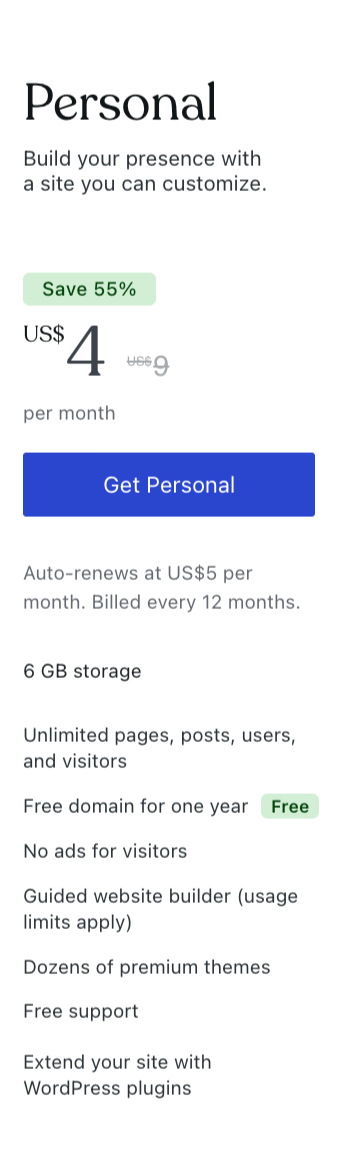
At the time of writing, it costs:
- $9 per month when billed monthly
- $4 per month when billed annually
The biggest advantage is that it includes a custom domain name and access to WordPress.com’s core features.
That means instead of using an address like:
yourblog.wordpress.com
You can use:
yourblog.com
That small change makes a huge difference in how professional your blog looks.
If you’re starting your first blog and want a simple path forward, this is usually the plan I’d recommend.
Premium Plan: More Customization and Growth Tools
The Premium plan costs:
- $18 per month when billed monthly
- $8 per month when billed annually
This plan is designed for bloggers who want additional design flexibility and more tools to customize their website.
If branding and visual presentation are important to you from the beginning, the Premium plan may be worth considering.
That said, don’t assume better customization automatically leads to more traffic or income.
Readers care far more about helpful content than fancy design elements.
Business Plan: For Bloggers Ready to Scale
The Business plan costs:
- $25 per month when billed annually
This is where many serious bloggers eventually move as their websites grow.
If you plan to run a content business, use advanced tools, or need more flexibility as your audience expands, the Business plan can make sense.
But for most beginners, it’s usually something to grow into rather than start with.
Commerce Plan: Built for Online Stores
The Commerce plan costs:
- $45 per month when billed annually
This plan is aimed at creators and businesses that want to sell products directly from their website.
If your primary goal is blogging, you probably won’t need this plan right away.
However, if you plan to sell physical products, manage an online store, or build a larger e-commerce business alongside your blog, it may be worth considering later.
Which Plan Should You Choose?
If you’re still unsure, keep it simple.
Choose the Personal plan.
It gives you a professional custom domain, access to WordPress.com’s core features, and everything you need to start publishing content.
Remember, blogs don’t make money because of expensive plans.
They make money because they attract readers, solve problems, and build trust over time.
The best plan is the one that gets you started today—not the one packed with features you won’t use for months.
Step 4: Choose a Domain Name That Builds Trust
Your domain name is one of the first things people notice about your blog.
But here’s a secret most new bloggers don’t realize:
A great domain name won’t make your blog successful.
A bad one can make things harder, though.
I’ve seen bloggers spend days—or even weeks—trying to find the perfect domain name. Meanwhile, someone else picks a decent name, publishes content, and starts building an audience.
Guess who wins?
The blogger who started.
What Makes a Good Domain Name?
The best domain names are usually simple.
They’re easy to remember, easy to type, and easy to share with other people.
When someone hears your domain name in a conversation, they should be able to type it into a browser without asking you to spell it three times.
That’s a good test.
Keep It Broad Enough to Grow
One mistake beginners often make is choosing a name that’s too specific.
Let’s say you start a personal finance blog and register a domain focused entirely on saving money.
A year later, you want to write about investing, side hustles, retirement planning, and building wealth.
Now your domain feels limiting.
Try to choose a name that gives you room to grow.
Your interests may evolve.
Your audience may evolve.
Your blog should be able to evolve with them.
Domain Name Best Practices
As a general rule:
- Keep it short and memorable
- Use words that are easy to spell
- Avoid numbers and hyphens
- Avoid unusual spellings
- Choose a .com extension if possible
- Make sure it sounds natural when spoken aloud
If people struggle to remember your domain after hearing it once, it’s probably not the best choice.
Don’t Obsess Over Keywords
Years ago, many bloggers stuffed keywords into their domain names because they believed it would help them rank higher in search engines.
Today, branding matters far more.
A memorable name that readers trust is usually more valuable than a domain that sounds like a list of search terms.
For example, a brandable name often ages much better than something overly optimized.
Your content will do most of the heavy work when it comes to traffic.
A Quick Domain Name Test
Before registering a domain, ask yourself:
- Can I imagine using this name five years from now?
- Would I feel comfortable putting it on a business card?
- Is it easy to say out loud?
- Can someone spell it after hearing it once?
If the answer is yes to all four, you’re probably looking at a solid choice.
Good Enough Beats Perfect
Look, every successful blog owner can point to something they would change about their first website.
Their domain name.
Their logo.
Their design.
Their content.
That’s normal.
What matters is getting started.
A good domain name launched today is worth far more than the perfect domain name you’re still searching for next month.
Choose one, register it, and move on to the part that actually grows a blog: creating content people want to read.
Step 5: Design Your Blog Without Hiring a Designer

When most people launch a blog, they immediately start worrying about design.
They spend hours comparing themes, testing color combinations, changing fonts, and rearranging layouts.
Here’s the funny part.
Most visitors don’t care nearly as much as you think they do.
Readers visit your blog because they want answers, ideas, or solutions. They aren’t grading your website like a design competition.
That doesn’t mean design is unimportant.
It just means your goal should be creating a clean, professional website—not an award-winning masterpiece.
Choose a Simple Theme
One of the biggest advantages of WordPress.com is that you can choose from professionally designed themes without needing coding skills.
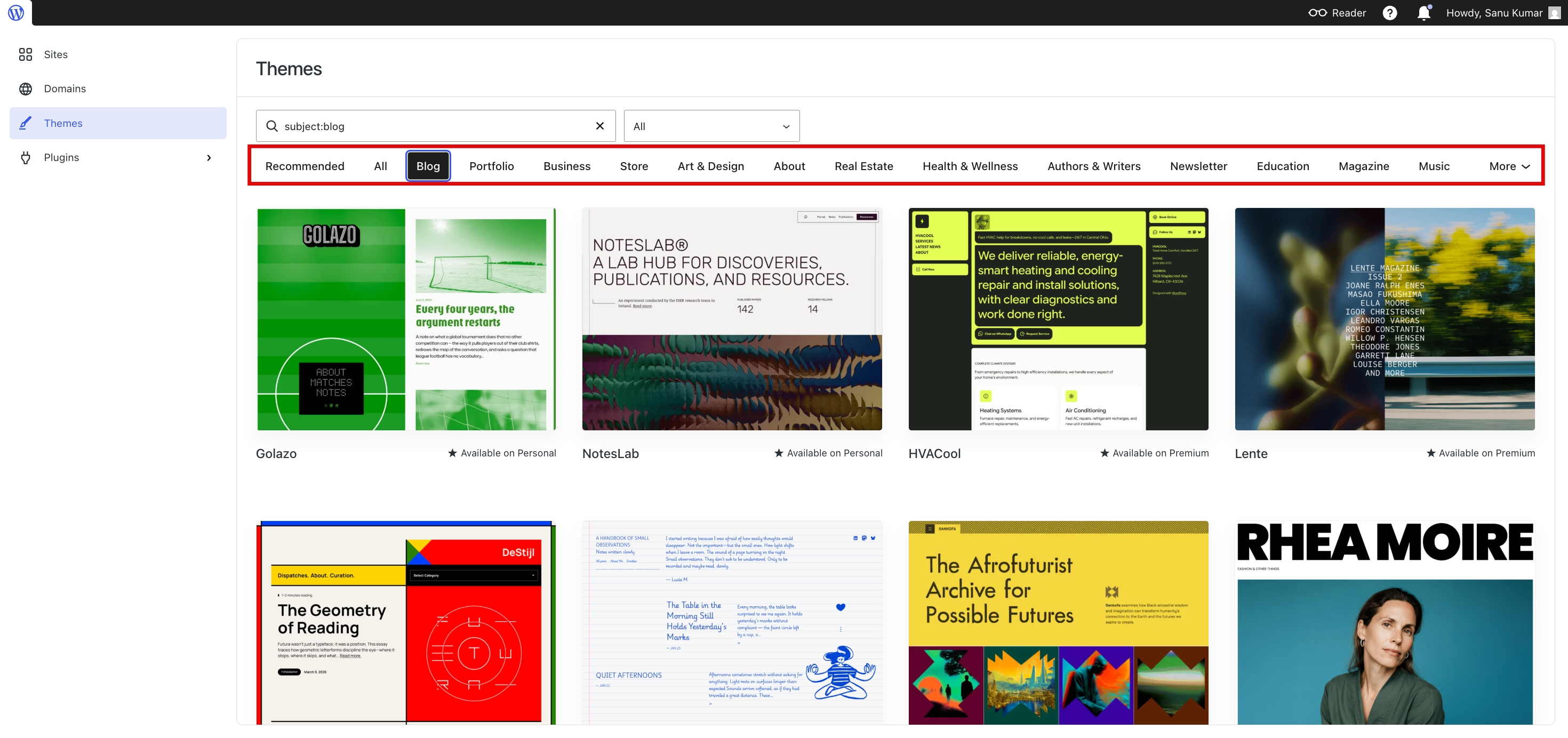
When selecting a theme, look for something that feels:
- Clean
- Fast-loading
- Easy to read
- Mobile-friendly
- Professional
If you can’t decide between multiple themes, pick the simplest one.
Simple designs tend to age better and keep the focus where it belongs: on your content.
Focus on Readability
Think about your favourite blogs.
Most aren’t packed with flashy animations and complicated layouts.
They’re easy to read.
That’s what matters.
Make sure your design includes:
- Plenty of white space
- Clear headings
- Easy-to-read fonts
- Good contrast between text and background
- A layout that works well on mobile devices
If visitors have to work hard to read your content, many won’t stick around.
Create These Essential Pages
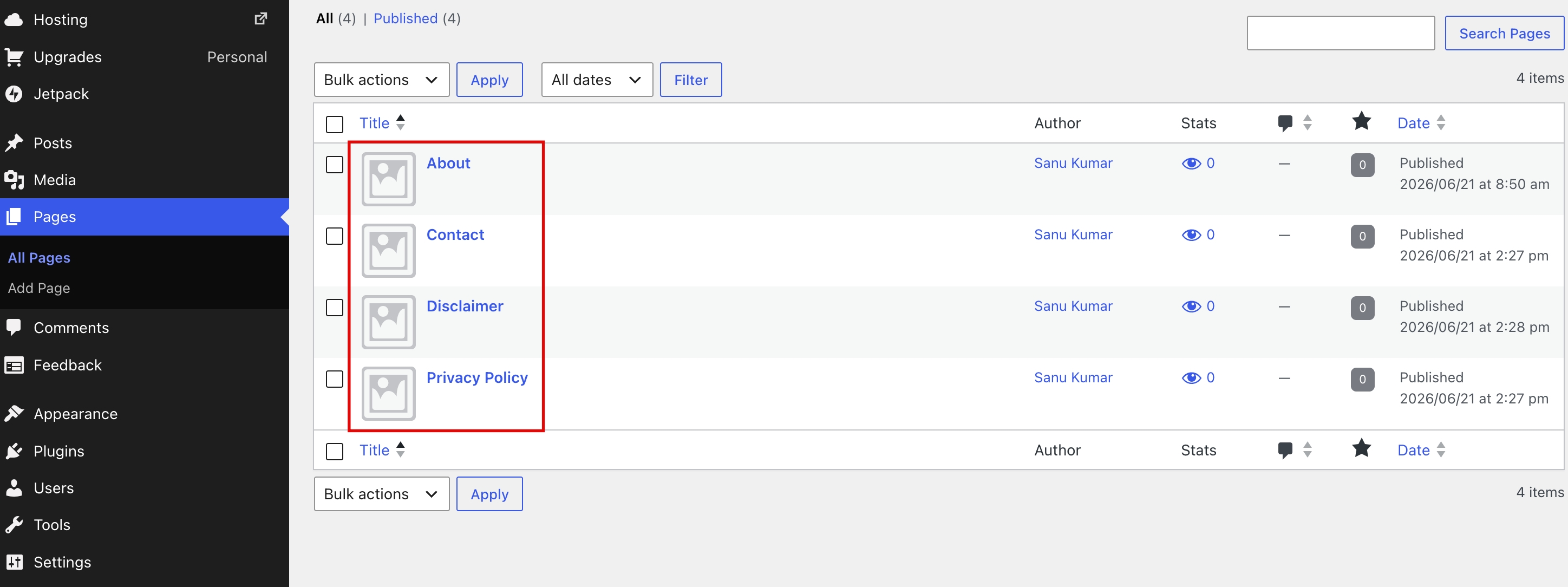
Before you start promoting your blog, create a few important pages.
About Page
This is where readers learn who you are and why they should trust you.
You don’t need an impressive resume.
Just be genuine.
Share your story, your interests, and what readers can expect from your blog.
Contact Page
Make it easy for readers, brands, and potential partners to reach you.
Even a simple contact form is enough when you’re starting out.
Privacy Policy
This page explains how visitor data is handled on your website.
It’s a basic requirement for most websites and helps build trust with readers.
Disclaimer Page
If you plan to use affiliate links, discuss financial topics, health advice, or other sensitive subjects, a disclaimer can help clarify your content’s purpose and limitations.
Don’t Worry About a Logo Yet
Many new bloggers think they need a perfect logo before publishing their first article.
You don’t.
A simple text-based logo using your blog name is completely fine in the beginning.
In fact, many successful blogs started with nothing more than a plain title at the top of the page.
Your content will build your brand far more effectively than a fancy logo.
The 80/20 Rule of Blog Design
A good rule of thumb is to spend about 20% of your time on design and 80% on content.
Why?
Because visitors rarely share a blog because they loved the font choice.
They share it because the content helped them solve a problem.
Once your blog looks professional, stop customizing and start publishing.
That’s where the real growth begins.
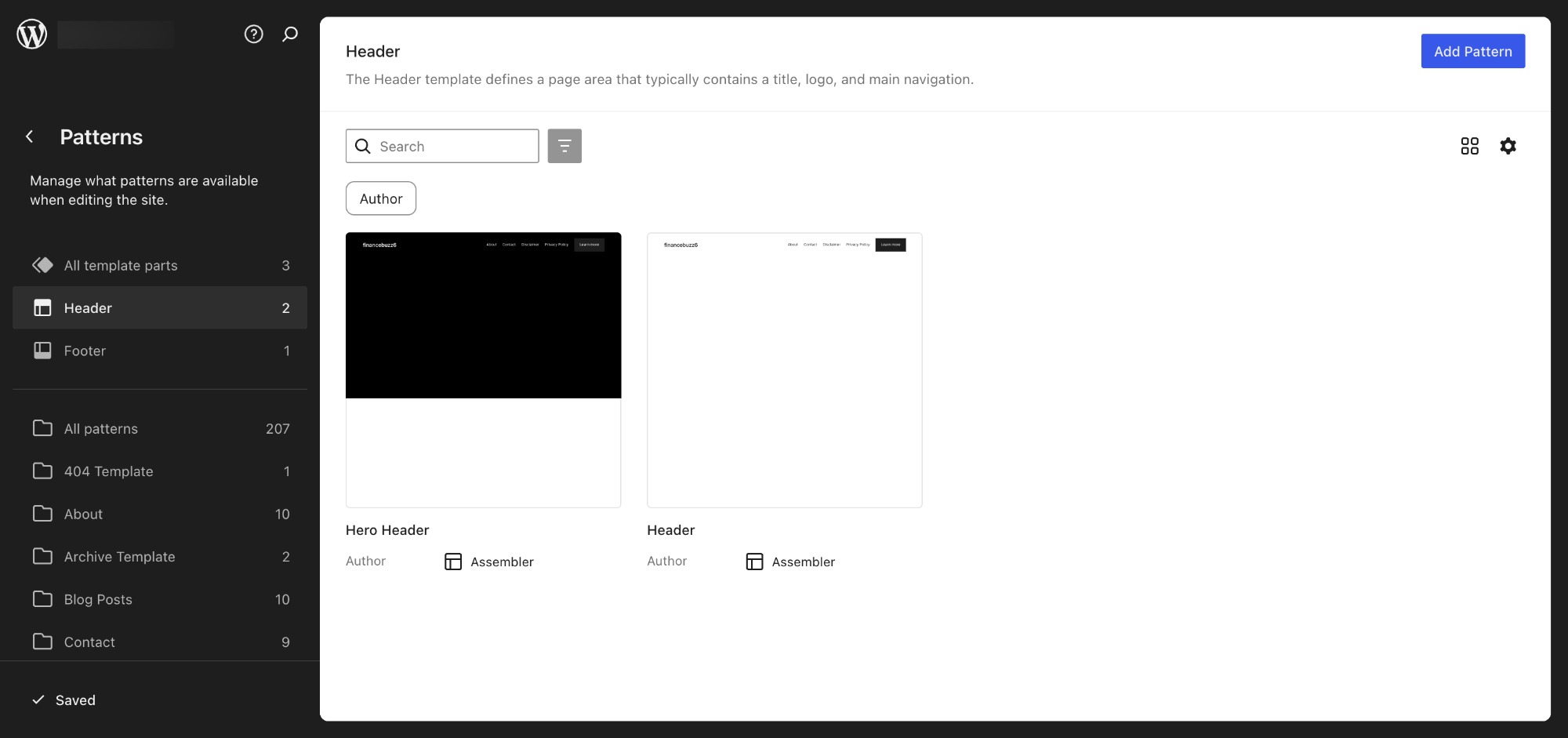
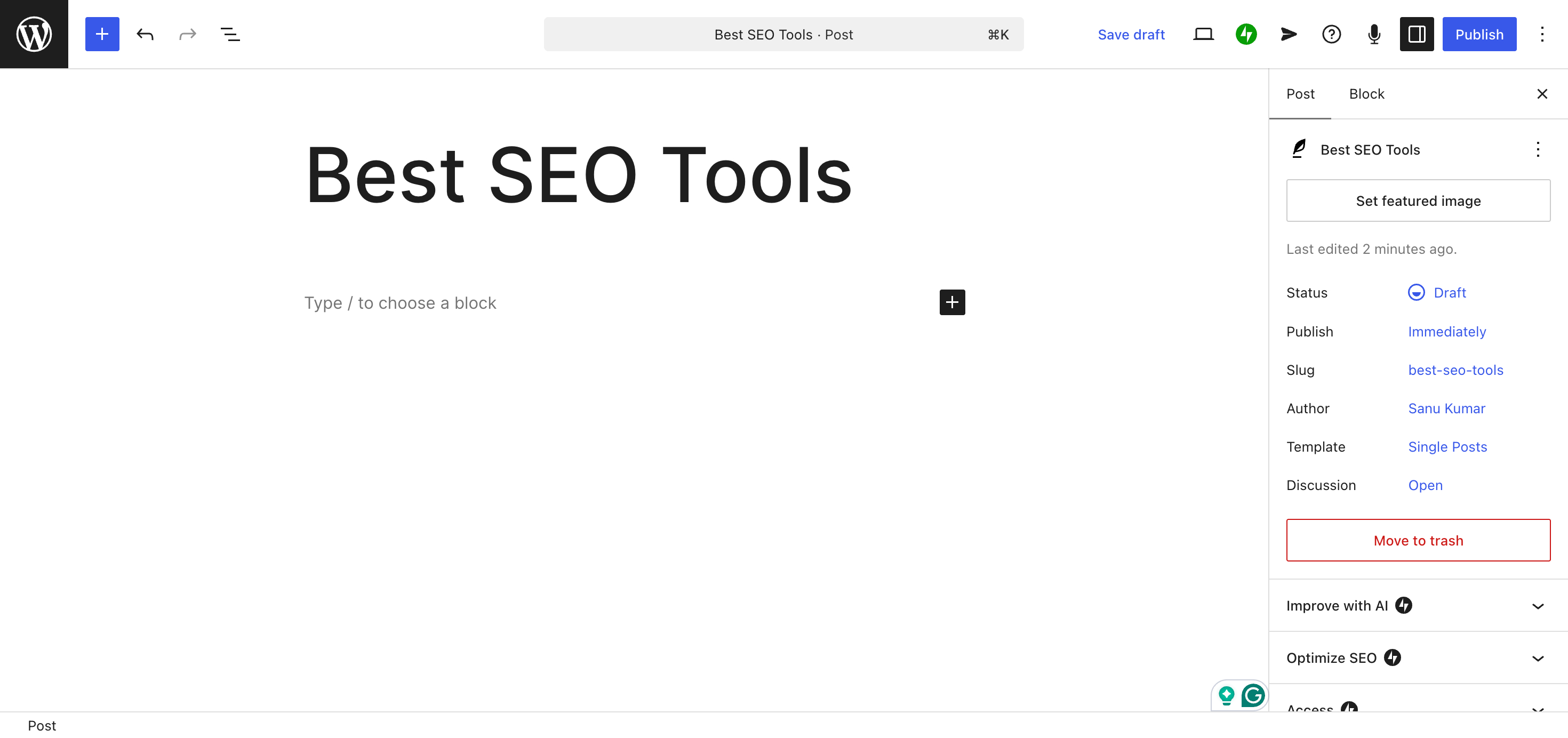
To customize your WordPress.com site, navigate to Appearance > Editor in your dashboard.
Step 6: Create Content People Actually Want to Read
Now that your blog is set up, it’s time to focus on the thing that will determine whether your blog succeeds or disappears into the internet graveyard:
Your content.
This is where many bloggers make a costly mistake.
They write about what they want to say instead of what readers want to know.
Then they wonder why nobody visits their website.
The blogs that attract traffic and make money usually have one thing in common: they solve problems.
Every article answers a question, teaches a skill, saves time, or helps someone achieve a goal.
That’s exactly what your content should do.
Start With Search Intent
Before writing any post, ask yourself:
Why would someone search for this topic?
Think about the problem behind the search.
For example, someone searching for “how to start a blog on WordPress.com” isn’t looking for the history of blogging.
They’re looking for a step-by-step solution.
Someone searching for “best budgeting apps” wants recommendations.
Someone searching for “how to lose weight without a gym” wants practical advice.
The closer your content matches what readers actually want, the better it tends to perform.
Find Topics People Are Already Searching For
One of the easiest ways to come up with blog ideas is to look at questions people are already asking.
Pay attention to:
- Google autocomplete suggestions
- Online communities and forums
- Social media discussions
- Comments on popular blogs in your niche
- Questions friends and coworkers frequently ask
If lots of people are asking the same question, that’s often a sign there’s demand for content on that topic.
Focus on Helpful, Not Perfect
Many new bloggers spend days polishing a single article.
Meanwhile, experienced bloggers publish useful content consistently and improve it over time.
Don’t let perfection stop you from publishing.
Your first blog post won’t be your best.
Neither will your tenth.
That’s normal.
Every article teaches you something.
The goal is progress, not perfection.
Publish Your First 10 Posts Quickly
One article won’t build a blog.
Ten gives you a foundation.
When readers discover your website, they want more than a single post.
They want evidence that your blog is active and worth following.
Try to create content around related topics within your niche.
For example, if you’re starting a personal finance blog, your first ten articles might cover:
- Budgeting
- Saving money
- Emergency funds
- Side hustles
- Paying off debt
- Investing basics
This creates topical depth and helps readers find more of your content.
Write Like You’re Helping One Person
One of the biggest breakthroughs for new bloggers happens when they stop writing for “everyone.”
Imagine you’re helping a friend solve a problem.
Use simple language.
Explain things clearly.
Avoid jargon when possible.
The internet already has enough content written to impress people.
What readers want is content that helps them.
The Content Formula That Never Gets Old
Before hitting publish, ask yourself:
- Does this solve a real problem?
- Is the advice practical?
- Would I share this with a friend?
- Is it better than what’s already ranking?
If the answer is yes, you’re moving in the right direction.
Remember, the goal isn’t to publish more content than everyone else.
The goal is to publish content that’s genuinely useful.
Do that consistently, and you’ll give your blog the best possible chance of attracting readers, building trust, and generating income over time.
Step 7: Set Up the Foundations for Traffic
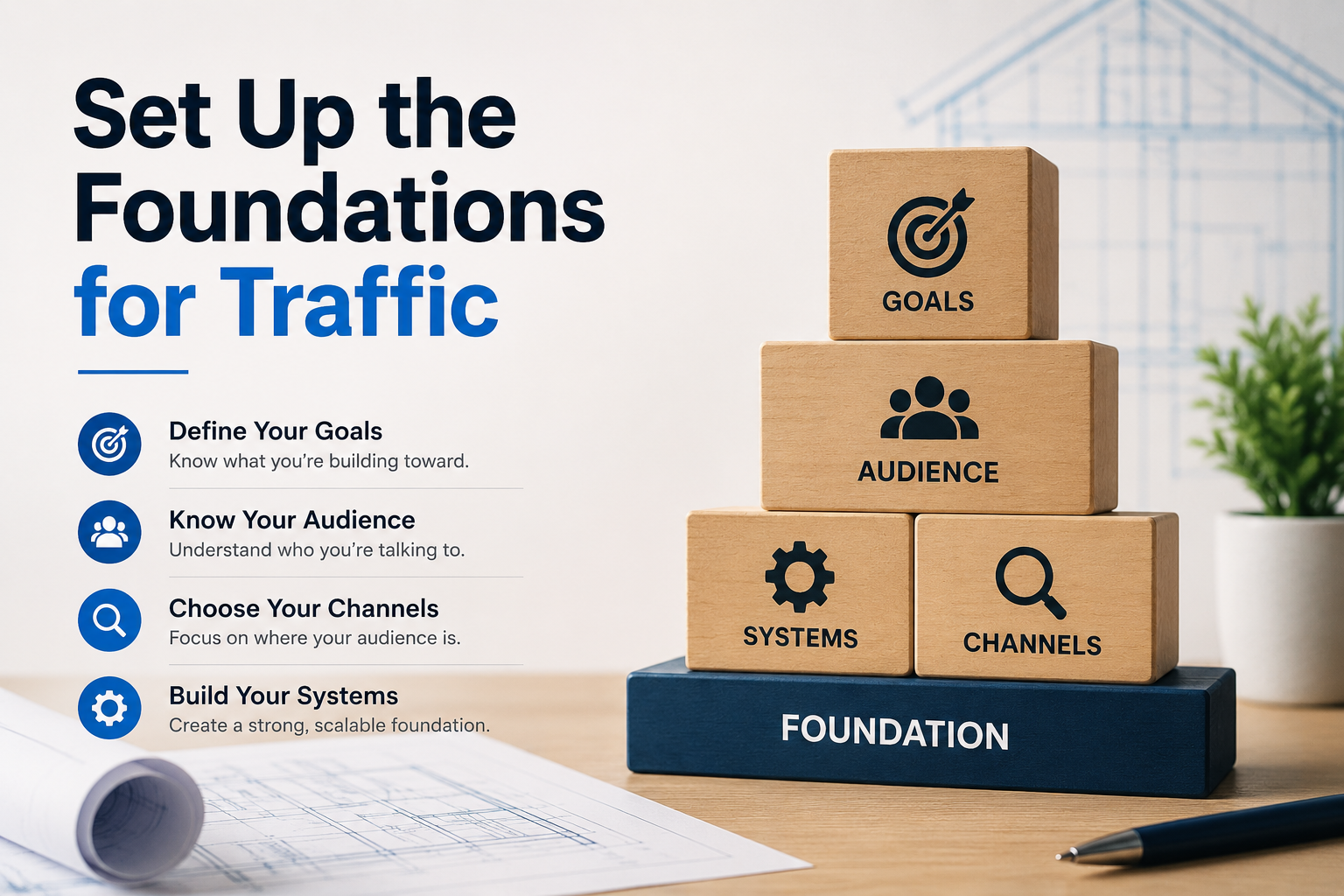
Publishing great content is important.
But here’s the reality:
Even the best blog post in the world won’t help your business if nobody sees it.
The good news is that you don’t need thousands of followers or a huge marketing budget to get traffic. You just need to make it easier for people—and search engines—to find your content.
Start With Basic SEO
SEO (Search Engine Optimization) sounds complicated, but the basic idea is simple:
Help search engines understand what your content is about.
When writing a post, make sure:
- Your title clearly describes the topic
- Your main keyword appears naturally in the article
- You use descriptive headings and subheadings
- Your content fully answers the reader’s question
- Images include relevant alt text when appropriate
Don’t try to outsmart search engines.
Focus on creating the best answer for the reader.
That’s still the foundation of good SEO.
Create a Logical Site Structure
Imagine walking into a library where books are scattered randomly across the floor.
Finding anything would be frustrating.
Blogs work the same way.
Organize your content into a few clear categories so visitors can easily find related articles.
For example, a personal finance blog might use categories such as:
- Budgeting
- Saving Money
- Investing
- Side Hustles
- Debt Repayment
Simple organization improves the user experience and helps search engines understand your website.
Use Internal Links
One of the easiest ways to keep readers on your blog longer is through internal linking.
Whenever relevant, link to other articles you’ve already published.
For example, if you’re writing about saving money, you might link to another article about budgeting or building an emergency fund.
Internal links help readers discover more content and create stronger connections between related topics on your site.
Make Mobile Readers a Priority
A large percentage of your visitors will likely read your blog on a phone.
Before publishing an article, check how it looks on mobile devices.
Ask yourself:
- Are paragraphs easy to read?
- Are headings clear?
- Do images display properly?
- Is navigation simple?
A blog that works well on mobile creates a better experience for readers and reduces the chance they’ll leave immediately.
Build an Email List Early
Many bloggers wait until they have significant traffic before collecting email subscribers.
That’s a mistake.
Even if you only have a handful of visitors each week, give people a way to subscribe.
An email list allows you to stay connected with readers instead of relying entirely on search engines or social media platforms.
Traffic sources can change.
An email list is something you own.
Consistency Beats Intensity
One of the biggest myths in blogging is that you need to publish every day.
You don’t.
What matters more is consistency.
One high-quality article every week is usually better than publishing ten articles in a burst and then disappearing for three months.
Readers appreciate consistency.
Search engines appreciate consistency.
And perhaps most importantly, consistency is sustainable.
Remember: Traffic Takes Time
This is the part nobody likes hearing.
Most blogs don’t attract significant traffic overnight.
In fact, many successful bloggers spent months publishing content before seeing meaningful results.
That doesn’t mean you’re failing.
It means you’re building.
Every helpful article is another door through which future readers can discover your blog.
Keep publishing.
Keep improving.
Keep showing up.
Traffic often arrives much later than people expect—but much faster than they realize once momentum starts building.
Step 8: Get Your First Visitors

Let’s clear up a common misconception.
The moment you publish a blog post, readers do not magically appear.
I wish it worked that way.
The internet contains billions of pages competing for attention. If you want people to discover your content, you need to give them a path to find it.
The good news?
You don’t need thousands of followers or a massive advertising budget to get your first visitors.
Let Google Work for You
For most bloggers, Google becomes the largest source of traffic over time.
That’s why it’s smart to create content around questions people are already searching for.
Think about the problems your audience wants to solve.
Then create the most helpful answer you can.
For example, if your blog is about fitness, someone might search for:
- How to lose weight without a gym
- Best home workout routine
- High-protein breakfast ideas
Each article becomes another opportunity for someone to discover your blog.
Traffic from search engines often starts slowly, but it can continue bringing readers for months or even years after you publish.
Share Your Content on Social Media
You don’t need to be everywhere.
In fact, trying to manage every social platform is one of the fastest ways to burn out.
Instead, focus on one platform where your audience already spends time.
Share helpful tips, insights, and snippets from your articles.
The goal isn’t to constantly promote your blog.
It’s to become a useful resource that people want to follow.
Don’t Ignore Pinterest
Many new bloggers overlook Pinterest.
That’s a mistake.
Unlike traditional social media platforms, Pinterest often behaves more like a search engine.
Users actively look for ideas, solutions, tutorials, and recommendations.
A single pin can continue driving traffic long after it’s published.
For bloggers in niches like lifestyle, food, personal finance, travel, home improvement, and DIY, Pinterest can be especially valuable.
Join Relevant Communities
Look for places where your audience already gathers.
That might include:
- Facebook groups
- Reddit communities
- Industry forums
- Online communities related to your niche
The key is to participate genuinely.
Help people.
Answer questions.
Share useful insights.
People are far more likely to visit your blog when they already trust your expertise.
Start Building an Email Audience
Every visitor who leaves your website without subscribing may never return.
That’s why building an email list matters from day one.
Even if only a few people subscribe each month, those subscribers can become some of your most loyal readers.
Over time, your email list becomes one of your most valuable assets because it gives you a direct connection to your audience.
Focus on Momentum, Not Viral Success
Many bloggers secretly hope their first article will go viral.
Most won’t.
And that’s okay.
A successful blog is usually built one reader at a time.
Ten visitors become one hundred.
One hundred becomes one thousand.
One thousand becomes ten thousand.
Growth often looks slow in the beginning.
Then one day, you realize your traffic is significantly higher than it was a few months ago.
That’s the power of consistency.
Your First Visitors Matter More Than You Think
When your blog is new, it’s easy to become obsessed with traffic numbers.
Try not to.
Those first ten visitors matter.
The first comment matters.
The first email subscriber matters.
The first person who says your content helped them matters.
Every successful blog started with small wins.
The goal isn’t to impress the internet.
The goal is to help real people.
Do that consistently, and the audience will come.
Step 9: Start Making Money From Your Blog
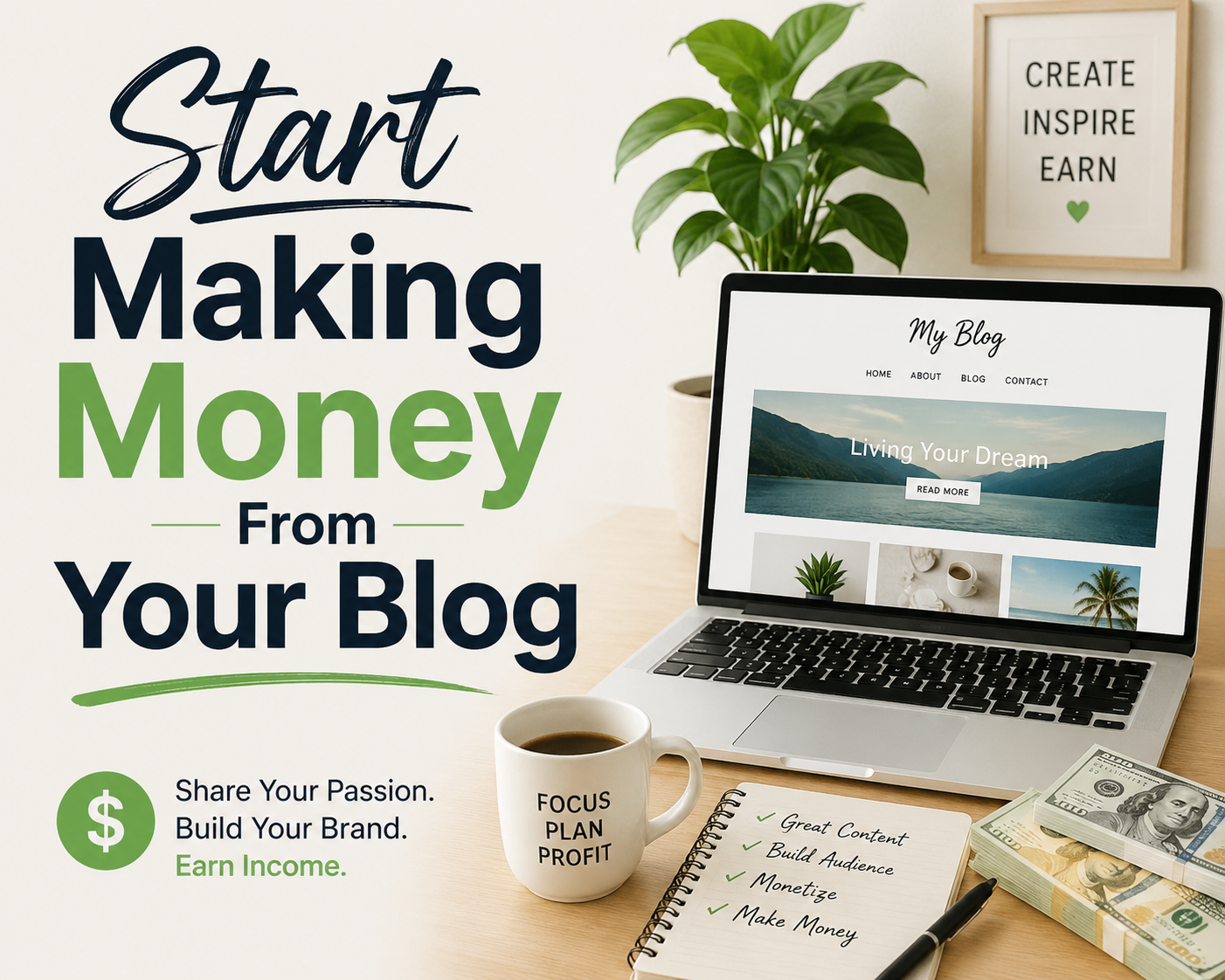
Let’s address the question that’s probably been sitting in the back of your mind since the beginning:
When does the money part happen?
The honest answer?
Usually not immediately.
Most successful blogs spend months building content, attracting readers, and earning trust before generating meaningful income.
That might sound discouraging, but it’s actually good news.
Why?
Because it means you don’t need luck to make money from blogging. You need patience, consistency, and a strategy.
The bloggers who earn income aren’t necessarily the best writers. They’re often the ones who keep showing up long after everyone else quits.
Affiliate Marketing
Affiliate marketing is one of the most popular ways bloggers make money.
Here’s how it works:
You recommend a product or service you genuinely believe can help your audience. If someone purchases through your referral link, you earn a commission.
For example, a blogging website might recommend:
- Email marketing software
- Website tools
- Online courses
- Productivity apps
A personal finance blog might recommend budgeting tools or investing platforms.
The secret is trust.
Readers can spot a fake recommendation from a mile away.
Promote products because they solve a problem, not because they offer a commission.
Display Advertising
As your traffic grows, display ads can become another income source.
These are the advertisements you see on many blogs.
Generally speaking, ad revenue becomes more meaningful once your website starts attracting a steady flow of visitors each month.
Ads won’t make you rich overnight, but they can create a consistent stream of passive income as your audience grows.
Sponsored Content
Brands are constantly looking for ways to reach new audiences.
As your blog gains authority, companies may pay you to feature their products, review services, or create sponsored content.
In the beginning, don’t worry about sponsorships.
Focus on building an audience first.
Brands care far more about engaged readers than they do about a fancy-looking website.
Sell Digital Products
One advantage of blogging is that you can create something once and sell it repeatedly.
Examples include:
- Ebooks
- Templates
- Printables
- Guides
- Workshops
- Online courses
Digital products often become attractive because there are no shipping costs and very little ongoing maintenance after they’re created.
Offer Services
Many bloggers earn their first income long before they earn meaningful ad revenue.
How?
By selling services.
For example:
- Freelance writing
- Consulting
- Coaching
- Graphic design
- Virtual assistance
- Marketing services
Your blog acts as a portfolio that demonstrates your expertise.
Even a small audience can generate clients if the right people are reading your content.
Memberships and Communities
As your audience grows, some readers may want deeper access to your knowledge, support, or resources.
That’s where memberships can make sense.
You might offer:
- Exclusive content
- Private communities
- Live Q&A sessions
- Premium resources
- Group coaching
This model isn’t necessary for every blog, but it can create recurring income once you’ve built a loyal audience.
Focus on Trust Before Revenue
One of the biggest mistakes new bloggers make is trying to monetize everything immediately.
Readers don’t visit a blog hoping to be sold something.
They visit because they need help.
When you consistently solve problems, trust grows.
When trust grows, monetization becomes much easier.
That’s why the smartest approach is often:
- Create helpful content.
- Build an audience.
- Earn trust.
- Introduce monetization naturally.
In that order.
How Much Money Can a Blog Make?
There’s no single answer.
Some blogs earn a few hundred dollars per month.
Others generate full-time incomes.
A small number grow into six-figure businesses.
The difference usually isn’t luck.
It’s consistency.
The bloggers who succeed keep publishing, keep learning, and keep improving long after the initial excitement wears off.
That’s why it’s better to think of blogging as building an asset rather than chasing quick money.
The income may take time, but the rewards can continue long after the work is done.
Realistic Blogging Timeline: What to Expect in Your First Year
One of the fastest ways to become disappointed with blogging is to expect overnight results.
Social media is full of stories about bloggers making thousands of dollars in a few months.
What you rarely see are the months—or years—of work that happened before those success stories.
The truth is that most profitable blogs are built gradually.
Knowing what to expect can help you stay motivated when growth feels slow.
Months 1–3: Building the Foundation
During your first few months, your focus should be on learning and publishing.
This is the stage where you’ll:
- Set up your WordPress.com blog
- Create your core pages
- Publish your first articles
- Learn basic SEO
- Start building a content library
Traffic will likely be low.
Very low.
You may have days where only a handful of people visit your website.
That’s completely normal.
At this stage, success isn’t measured by income.
It’s measured by consistency.
Months 4–6: Early Signs of Growth
If you’ve been publishing helpful content consistently, you may start noticing small wins.
You might see:
- More impressions in search results
- A few email subscribers
- Comments from readers
- Articles beginning to rank
- Small traffic increases
This stage can be exciting because your efforts start producing visible results.
The challenge is staying patient.
Growth is often uneven.
Some weeks feel amazing.
Others feel like nothing is happening.
Keep going.
Months 7–12: Momentum Begins to Build
By this point, you’ll likely have a stronger content library and a better understanding of your audience.
You may start seeing:
- More consistent search traffic
- Growing email subscribers
- Early affiliate commissions
- Better rankings for target keywords
- Increased engagement from readers
Not every blog reaches significant income during the first year.
But many bloggers begin seeing proof that their strategy is working.
That’s an important milestone.
Milestones Worth Celebrating
It’s easy to focus only on revenue.
Don’t.
Some of the most important milestones happen long before your first dollar.
Celebrate things like:
- Publishing your first post
- Reaching 10 published articles
- Getting your first email subscriber
- Receiving your first comment
- Earning your first affiliate commission
- Reaching 1,000 monthly visitors
These moments may seem small, but they’re signs that your blog is moving forward.
The Biggest Difference Between Successful and Unsuccessful Bloggers
It isn’t talent.
It isn’t luck.
And it usually isn’t a technical skill.
It’s persistence.
Most blogs fail because their owners stop publishing before results have time to appear.
The bloggers who eventually earn meaningful income are often the ones who kept going when the numbers looked discouraging.
Think Long-Term
A blog isn’t a lottery ticket.
It’s more like planting a tree.
At first, it looks like nothing is happening.
Then the roots begin to grow.
Eventually, those small efforts compound into something much larger.
That’s why the best time to start was months ago.
The second-best time is today.
The sooner you begin publishing, the sooner you’ll give your future self the chance to benefit from the work you’re doing now.
Common Blogging Mistakes That Kill Growth
Most blogs don’t fail because the owner isn’t smart enough.
They fail because of a handful of avoidable mistakes.
The good news?
Once you know what these mistakes are, they’re surprisingly easy to avoid.
Constantly Redesigning the Blog
This is one of the most common traps new bloggers fall into.
You publish a few articles, then decide the theme isn’t quite right.
A week later, you change the homepage.
Then you tweak the colours.
Then the fonts.
Then the logo.
Before you know it, you’ve spent 20 hours redesigning your website and zero hours creating content.
A clean, professional blog is important.
But after that, your energy should go into publishing helpful articles.
Readers come for content, not colour palettes.
Choosing a Niche That’s Too Broad
A blog about “everything” usually ends up attracting nobody.
When readers land on your website, they should immediately understand what it’s about and who it’s for.
That’s why focused blogs often grow faster than general-interest blogs.
You don’t need to cover every topic under the sun.
You just need to become useful to a specific audience.
Publishing Without a Plan
Many bloggers write whatever comes to mind each week.
The result is a collection of random articles that don’t support one another.
Instead, think in terms of content clusters.
Create multiple articles around related topics so readers can continue learning from your site.
This approach helps build authority and gives visitors more reasons to stay on your blog.
Ignoring SEO Completely
You don’t need to become an SEO expert.
But ignoring SEO altogether makes growth much harder.
Remember, search engines are one of the biggest sources of traffic for many blogs.
Take time to understand:
- What readers are searching for
- How to structure content clearly
- How to write useful titles
- How to organize your website
Small improvements can make a big difference over time.
Trying to Make Money Too Soon
It’s tempting to place affiliate links everywhere and cover your website with ads from day one.
But monetization works best when trust comes first.
If every article feels like a sales pitch, readers may leave before they ever become loyal followers.
Focus on helping people.
Revenue tends to follow.
Comparing Yourself to Established Bloggers
This mistake has ended more blogging journeys than almost anything else.
A brand-new blogger compares their website to someone who’s been publishing for five years.
Of course, the difference looks enormous.
You’re comparing your beginning to someone else’s middle.
Instead of worrying about what others are doing, focus on improving your own blog one article at a time.
Quitting Too Early
This is the biggest mistake of all.
Most blogs don’t fail because the strategy was wrong.
They fail because the blogger stopped.
Traffic was growing slowly.
Income wasn’t coming fast enough.
Motivation disappeared.
So they quit.
The problem is that many blogs are closest to meaningful growth right before their owners give up.
Consistency often rewards people much later than they expect.
Keep the Main Thing the Main Thing
If you remember only one lesson from this guide, let it be this:
Successful bloggers spend most of their time creating content that helps readers.
Not obsessing over design.
Not chasing every new tactic.
Not constantly switching strategies.
They publish.
They learn.
They improve.
Then they repeat the process.
Do that long enough, and you’ll put yourself in a much better position than the majority of people who start a blog and never stick with it.
Frequently Asked Questions
Is WordPress.com good for beginners?
Yes. WordPress.com is one of the most beginner-friendly blogging platforms available. It handles hosting, software updates, and security for you, which means you can focus on creating content instead of maintaining a website.
How much does it cost to start a blog on WordPress.com?
The cost depends on the plan you choose.
Current WordPress.com pricing includes:
- Personal: $9/month or $4/month billed annually
- Premium: $18/month or $8/month billed annually
- Business: $25/month billed annually
- Commerce: $45/month billed annually
For most new bloggers, the Personal plan provides everything needed to launch a professional blog with a custom domain.
Can you make money with a WordPress.com blog?
Yes. Many bloggers earn money through affiliate marketing, display advertising, sponsored content, digital products, memberships, and services.
However, successful monetization usually requires consistent content creation, audience growth, and trust-building over time.
Which WordPress.com plan is best for bloggers?
For most beginners, the Personal plan is the best place to start.
It includes a custom domain and access to WordPress.com’s core features without requiring a large upfront investment.
As your blog grows, you can upgrade to Premium, Business, or Commerce if you need additional functionality.
How long does it take to make money blogging?
There is no fixed timeline.
Some bloggers earn their first commission within a few months, while others take longer.
Factors such as your niche, content quality, consistency, traffic, and monetization strategy all play a role.
The bloggers who see the best results are usually the ones who stay committed long enough to build an audience.
Do I need technical skills to start a WordPress.com blog?
No.
One of the biggest advantages of WordPress.com is that it manages the technical side of running a website. Hosting, software updates, and security are handled for you, making it a strong option for beginners with little or no technical experience.
Should I start with the free plan?
If you’re serious about building a blog that can eventually make money, it’s usually worth starting with a paid plan.
The Personal plan includes a custom domain, which helps your blog look more professional and gives you a stronger foundation for long-term growth.
Final Thoughts: Start Before You’re Ready
Most people who want to start a blog never actually do.
They spend months researching platforms, comparing plans, watching tutorials, and waiting for the perfect moment.
The perfect moment never comes.
Every successful blogger started exactly where you are right now: with no audience, no traffic, and no guarantee that their efforts would pay off.
The difference is that they started.
If you’re looking for a simple way to launch a blog, WordPress.com removes many of the technical obstacles that stop beginners from taking action. Hosting, software updates, and security are handled for you, allowing you to focus on what really matters: creating valuable content and building an audience.
Will your blog make money next week?
Probably not.
Could it become a valuable asset that generates income for years to come?
Absolutely.
But that only happens after you publish the first post.
Choose your niche.
Register your domain.
Launch your blog.
Then keep showing up.
A year from now, you’ll be glad you started today.
My Experience With WordPress.com
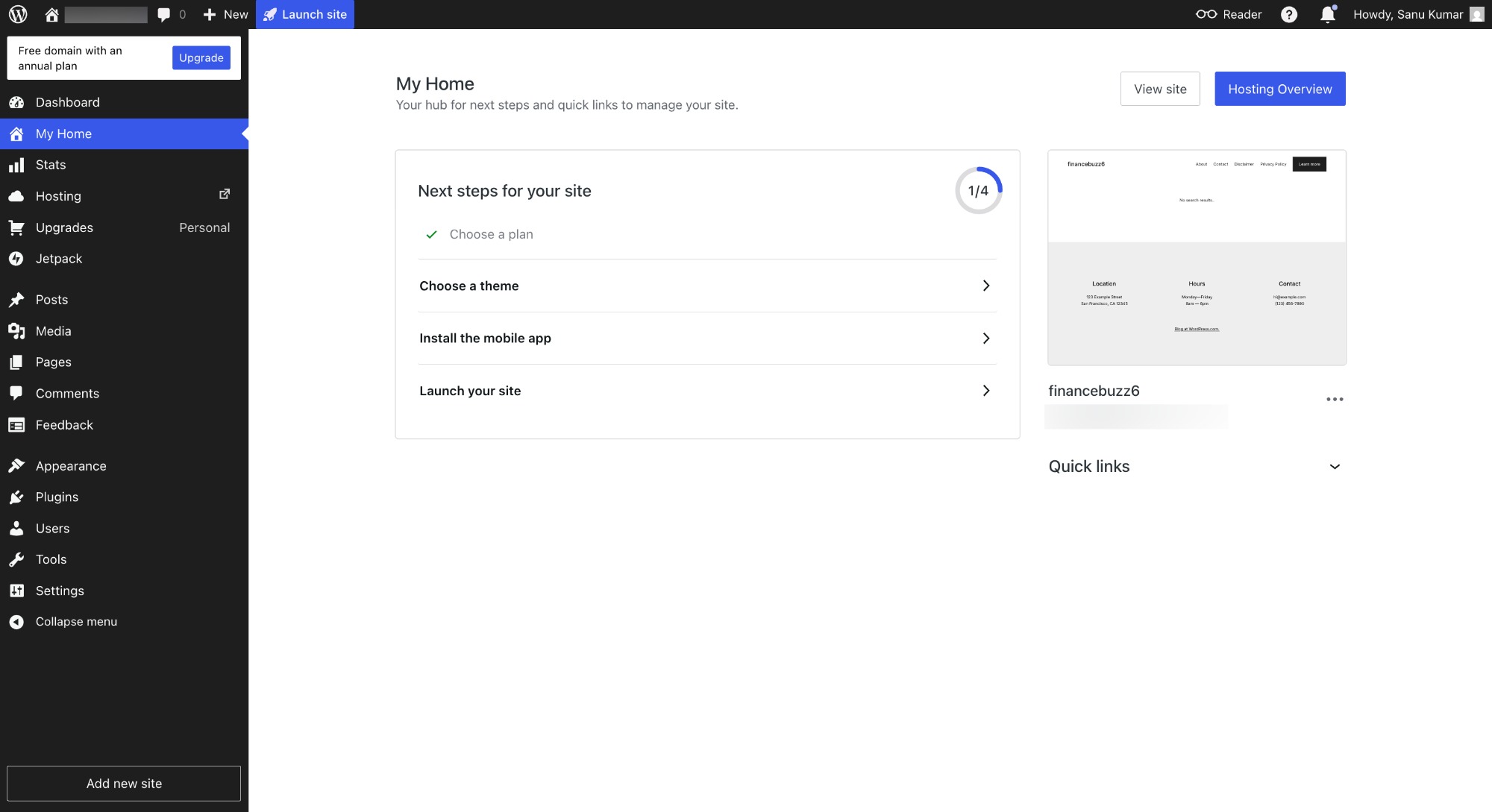
When I created my WordPress.com blog, I expected a much more complicated setup process. I thought I would need to deal with web hosting, software installation, and security settings before I could build my site.
To my surprise, WordPress.com guided me through the basics right away. I chose a site name, selected a domain, and picked a plan without dealing with any technical setup.
Choosing a domain name took the most time. I wanted something memorable, available, and relevant to my niche, which proved more challenging than I anticipated. Once I settled on a name, I moved on to customizing the site.
One of the first features I explored was the WordPress.com editor. At first, the Block Editor felt different from tools like Google Docs or Microsoft Word. Rather than writing everything in a single document, I added separate blocks for headings, paragraphs, images, buttons, and other content.
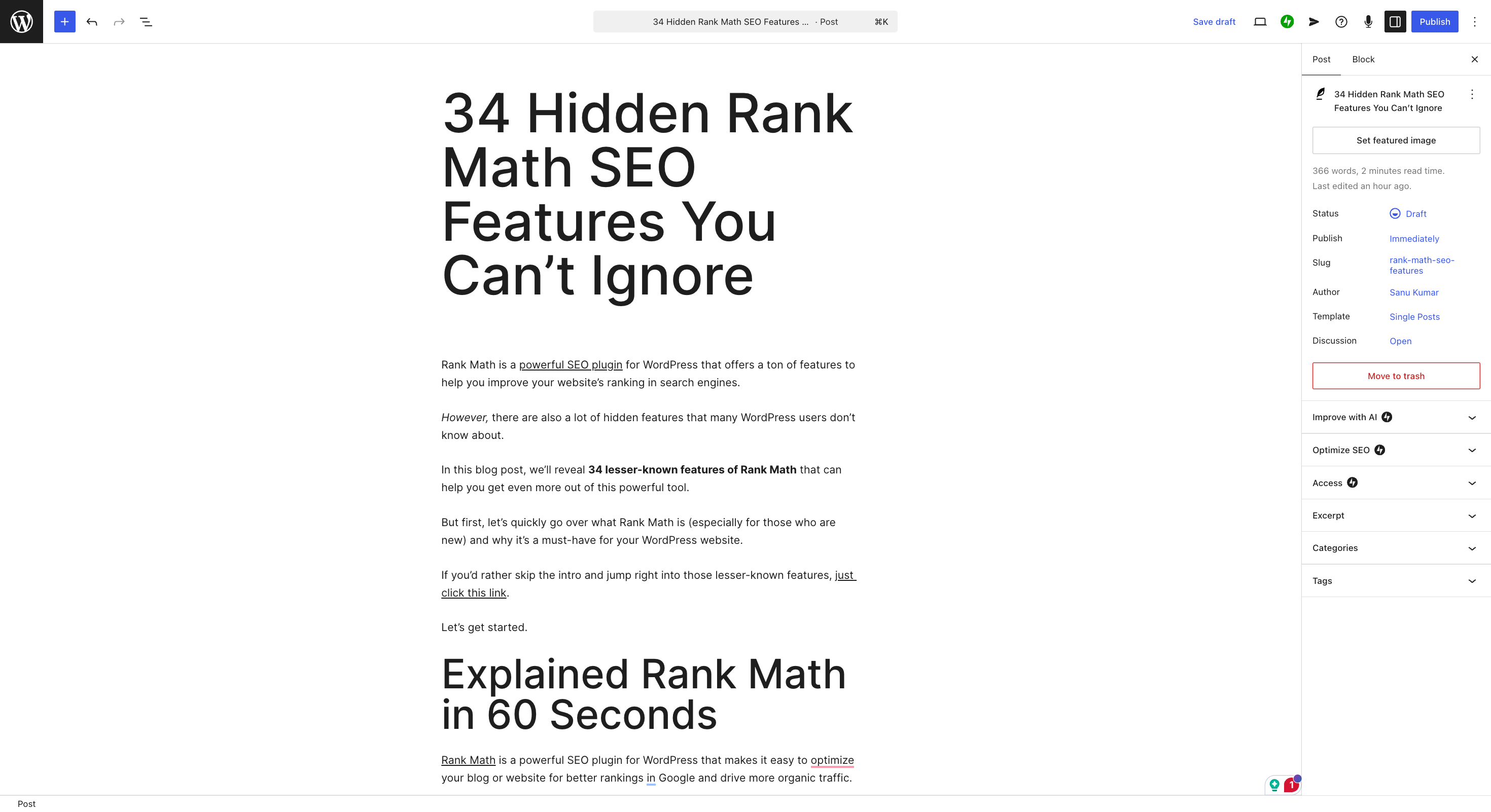
After creating a few draft posts, I became comfortable with the system and found it easy to organize articles and rearrange sections.
I also spent time exploring different themes. The number of available options surprised me, and I often found myself comparing one design to another. After a while, I realized that a simple, clean theme worked perfectly for my needs. Focusing on content proved far more productive than searching for the ideal layout.
Throughout the process, I appreciated not having to manage the technical side of running a website. WordPress.com handled hosting, software updates, and security, so I could concentrate on writing posts, building pages, and preparing the blog for visitors.
For more details, read my full WordPress.com review.
When I look back on the experience, the process feels much easier than I originally expected.
Most of my time went into choosing a niche, developing content ideas, and building my brand rather than maintaining the website itself.
For anyone starting a blog for the first time, that can make the experience much more approachable.
A Few Things I Didn’t Love About WordPress.com
Overall, I found WordPress.com beginner-friendly, but it isn’t perfect.
Like any platform, there are trade-offs.
The Pricing Structure Isn’t Very Clear
One thing that took me a while to sort out was the difference between the various plans.
At first glance, the Personal, Premium, Business, and Commerce plans look similar. But when you start comparing features, it’s not always immediately obvious which plan makes the most sense for your goals.
If you’re completely new to blogging, you may spend some time reviewing the plan details before deciding where to start.
Some Features Are Locked Behind Higher-Tier Plans
WordPress.com keeps the setup process simple, but some advanced functionality requires upgrading to a higher plan.
For many beginners, this won’t matter.
However, more experienced users who are used to having complete control over every aspect of their website may eventually find themselves wanting features that aren’t available on lower-tier plans.
The Number of Choices Can Be Overwhelming
While setting up the site, I noticed there were plenty of themes, customization settings, and design options available.
That’s great for flexibility, but it can also become a distraction.
It’s surprisingly easy to spend hours experimenting with layouts and appearance settings instead of publishing content.
It May Not Be the Best Fit for Every Blogger
If your goal is maximum flexibility and complete control over every aspect of your website, you may eventually prefer a self-hosted WordPress.org setup.
WordPress.com is built to simplify website management, and that’s one of its biggest strengths. The trade-off is that some users may eventually outgrow the platform as their needs become more advanced.
Are These Dealbreakers?
For most new bloggers, probably not.
In fact, some of these limitations are the result of what makes WordPress.com attractive in the first place. By handling hosting, software updates, and security for you, the platform removes much of the technical complexity that often overwhelms beginners.
For me, the benefits outweighed the drawbacks, especially for someone who wants to launch a blog quickly and focus on creating content rather than managing a website.